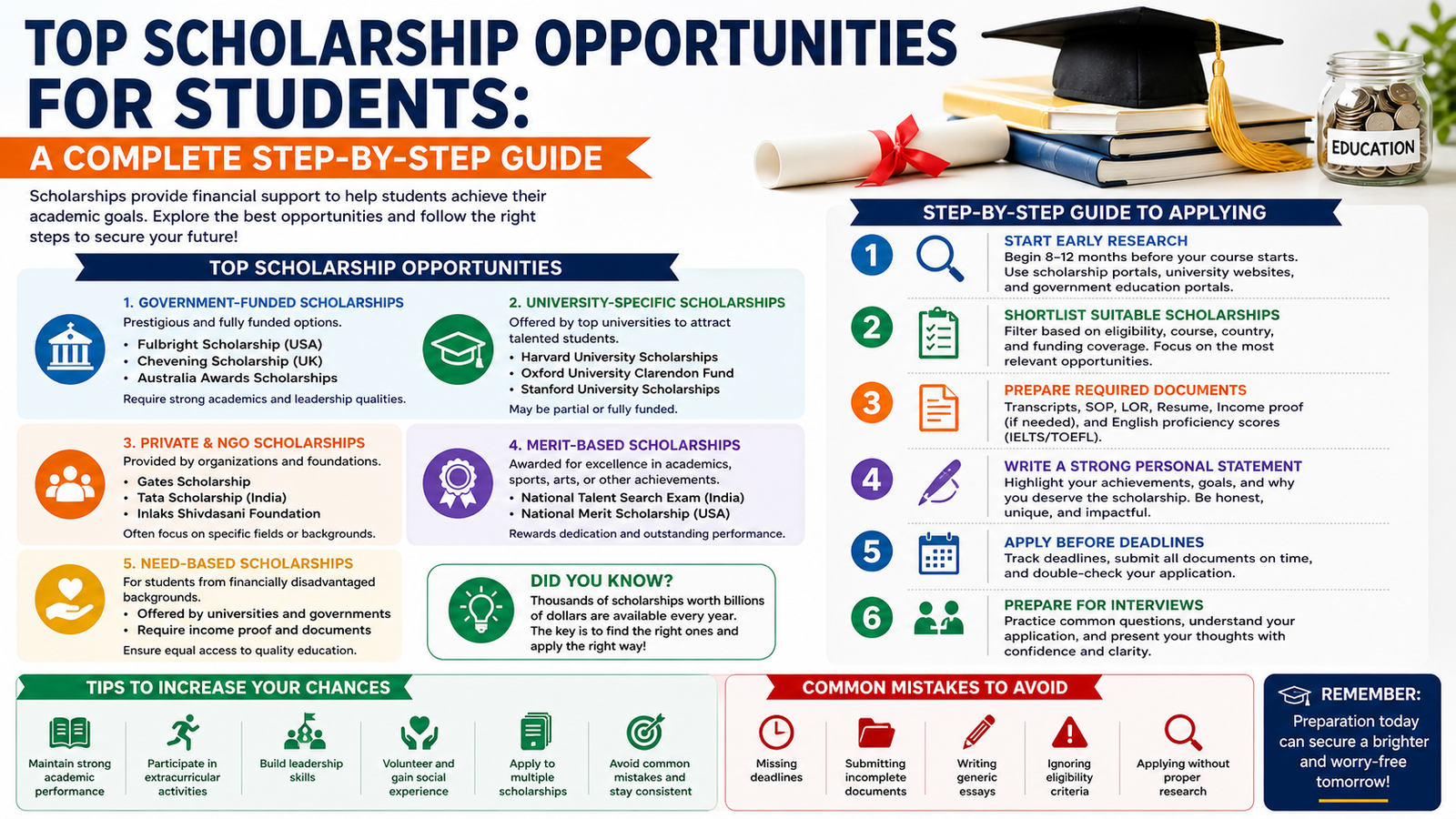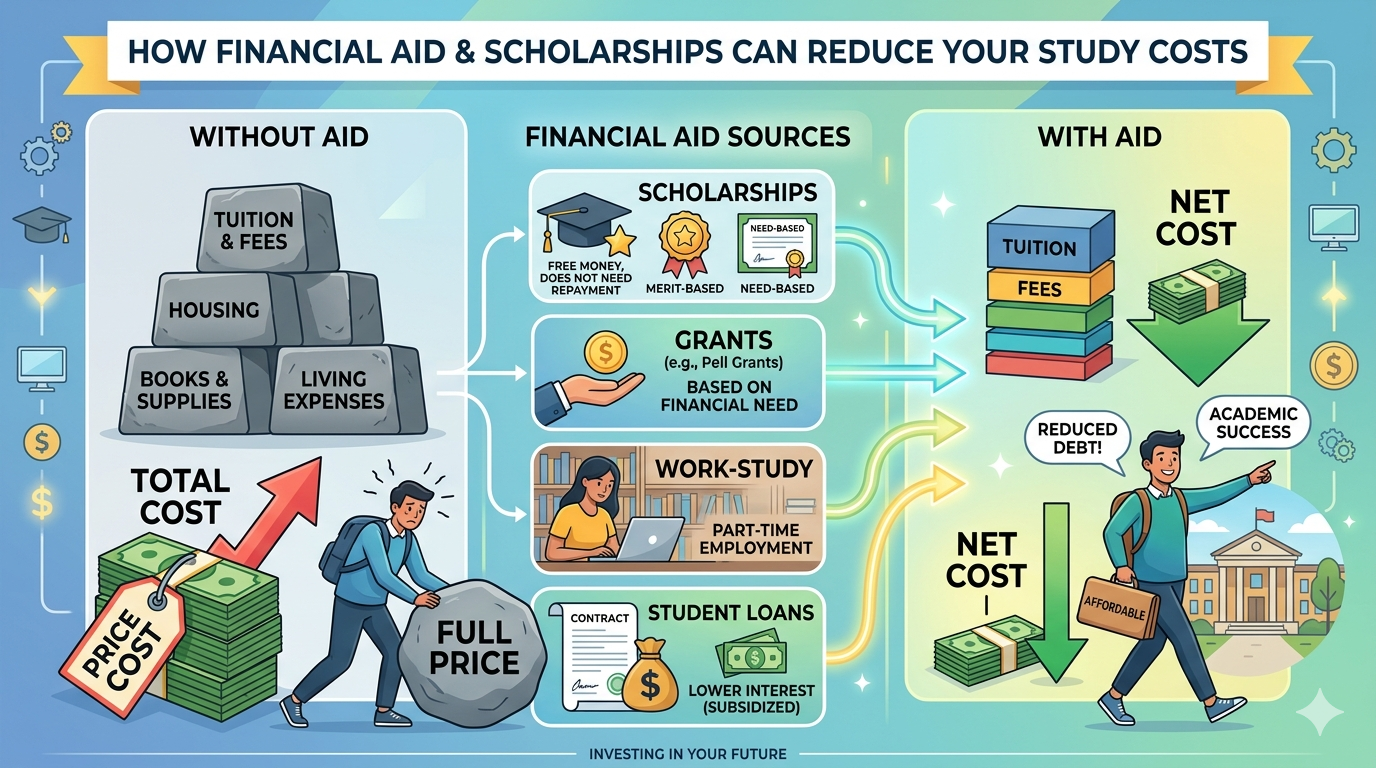
Learn how financial aid and scholarships can significantly reduce your education expenses. Discover types, benefits, application tips, and strategies to fund your studies smartly.
Pursuing higher education is one of the most valuable investments you can make in your future—but it often comes with a high price tag. Tuition fees, accommodation, books, and daily living expenses can quickly add up, creating financial stress for students and their families. Fortunately, financial aid and scholarships provide powerful solutions to reduce these costs and make education more accessible.
This article explores how financial aid and scholarships work, their types, benefits, and practical strategies to maximize your chances of receiving them.
Understanding Financial Aid
Financial aid is any form of funding that helps students pay for their education. It can come from governments, institutions, private organizations, or employers. The primary goal is to ensure that financial limitations do not prevent capable students from accessing quality education.
Types of Financial Aid
1. Grants
Grants are typically need-based and do not require repayment. They are often provided by governments or educational institutions. These are ideal for students from low-income backgrounds.
2. Loans
Student loans must be repaid with interest, but they usually offer lower interest rates compared to personal loans. While helpful, they should be used carefully to avoid long-term debt.
3. Work-Study Programs
These programs allow students to work part-time while studying, helping them earn money to cover expenses.
4. Tuition Waivers
Some institutions offer partial or full tuition waivers based on merit, financial need, or specific criteria.
What Are Scholarships?
Scholarships are financial awards given to students based on merit, talent, or specific criteria. Unlike loans, scholarships do not need to be repaid, making them one of the best ways to reduce study costs.
Common Types of Scholarships
1. Merit-Based Scholarships
Awarded for academic excellence, leadership, or achievements in extracurricular activities.
2. Need-Based Scholarships
Designed for students who demonstrate financial need.
3. Sports Scholarships
Offered to students with exceptional athletic abilities.
4. Subject-Specific Scholarships
Given to students pursuing specific fields like engineering, medicine, or arts.
5. Government Scholarships
Many governments offer scholarships to support education domestically and abroad.
6. Private Scholarships
Provided by companies, NGOs, or foundations for various criteria.
How Financial Aid Reduces Study Costs
1. Covers Tuition Fees
One of the biggest expenses in education is tuition. Scholarships and grants can cover a significant portion—or even the entire cost—of tuition.
2. Reduces Living Expenses
Some financial aid packages include allowances for accommodation, food, and transportation, easing the overall financial burden.
3. Minimizes Debt
By relying more on scholarships and grants instead of loans, students can graduate with little to no debt.
4. Provides Academic Freedom
With fewer financial worries, students can focus more on studies, research, and skill development instead of part-time work.
5. Encourages Better Performance
Many scholarships require maintaining a certain academic standard, motivating students to perform better.
Benefits of Scholarships and Financial Aid
1. Increased Access to Education
Students from all economic backgrounds get equal opportunities to pursue higher education.
2. Reduced Financial Stress
Knowing that your education is funded allows you to concentrate on learning.
3. Career Opportunities
Scholarships often add value to your resume, making you more attractive to employers.
4. Networking Opportunities
Many scholarship programs connect students with professionals, mentors, and alumni networks.
How to Find Scholarships and Financial Aid
1. Research Online
Use scholarship portals, university websites, and government platforms to find opportunities.
2. Check University Websites
Most colleges have dedicated sections for financial aid and scholarships.
3. Contact Financial Aid Offices
They can guide you through available options and application processes.
4. Follow Deadlines
Missing deadlines is one of the most common reasons students lose opportunities.
Tips to Increase Your Chances of Getting Scholarships
1. Start Early
Begin your search at least a year before your intended admission.
2. Maintain Strong Academic Performance
Good grades significantly improve your chances.
3. Build a Strong Profile
Participate in extracurricular activities, volunteer work, and leadership roles.
4. Write a Compelling Personal Statement
Clearly explain your goals, achievements, and financial need.
5. Apply to Multiple Scholarships
Don’t rely on just one opportunity—apply to as many as possible.
6. Prepare Required Documents
Keep transcripts, recommendation letters, and certificates ready.
Common Mistakes to Avoid
- Missing deadlines
- Submitting incomplete applications
- Ignoring smaller scholarships (they can add up)
- Using generic essays instead of tailored ones
- Not checking eligibility criteria carefully
Financial Planning Alongside Scholarships
Even with scholarships, proper financial planning is essential.
1. Create a Budget
Track your expenses and avoid unnecessary spending.
2. Save on Accommodation
Consider shared housing or campus accommodation.
3. Use Student Discounts
Take advantage of discounts on transport, books, and software.
4. Part-Time Work
If possible, work part-time to cover additional costs.
Role of Parents and Guardians
Parents can support students by:
- Helping research scholarship opportunities
- Assisting with documentation
- Encouraging financial discipline
- Planning long-term education finances
Scholarships for International Students
Many countries offer scholarships to attract global talent. These scholarships often cover:
- Tuition fees
- Travel expenses
- Living costs
Students should check visa requirements and eligibility criteria before applying.
Future Trends in Financial Aid
The landscape of financial aid is evolving with:
- Increased digital scholarship platforms
- AI-based matching systems
- More corporate-sponsored scholarships
- Flexible funding options
These trends are making it easier for students to find and apply for financial support.
Conclusion
Financial aid and scholarships play a crucial role in making education affordable and accessible. By reducing tuition costs, minimizing debt, and easing financial stress, they allow students to focus on what truly matters—learning and building a successful future.
With proper research, early preparation, and strategic applications, students can significantly reduce their study expenses. Whether you come from a financially strong background or face economic challenges, there are opportunities available to support your educational journey.
FAQs
Q1. What is the difference between financial aid and scholarships?
Financial aid includes all types of funding like loans, grants, and work-study, while scholarships are a type of aid that does not require repayment.
Q2. Can I apply for multiple scholarships at once?
Yes, applying to multiple scholarships increases your chances of receiving financial support.
Q3. Are scholarships only for top students?
No, scholarships are available for various criteria including financial need, sports, arts, and specific fields of study.
Q4. Do I need to repay financial aid?
Grants and scholarships do not need repayment, but loans must be repaid with interest.
Q5. When should I start applying for scholarships?
It’s best to start at least 6–12 months before your course begins.