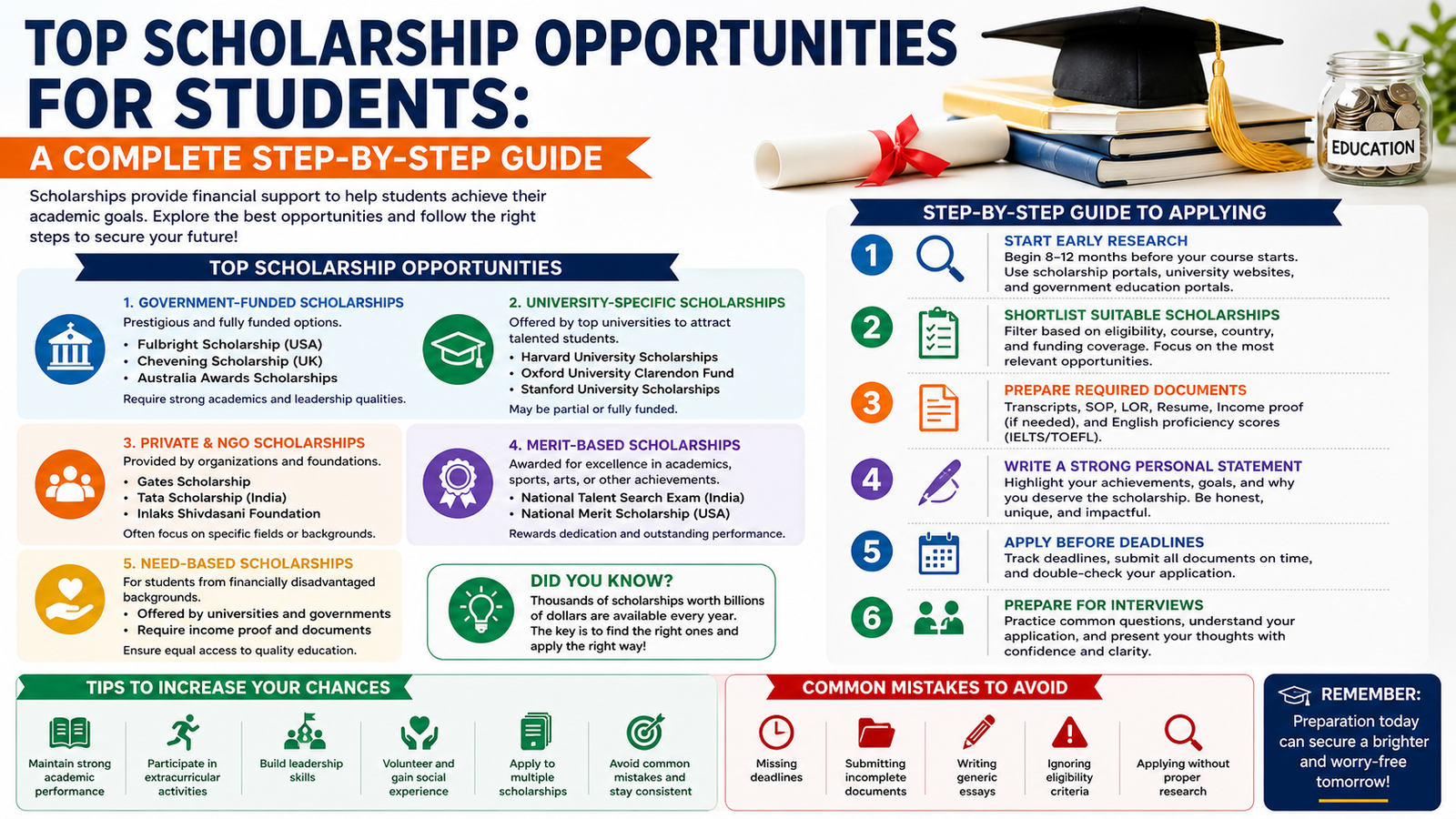
Discover the most common mistakes students make when applying for scholarships and learn practical tips to avoid them. Improve your chances of winning scholarships with this complete guide.
Applying for scholarships can be a life-changing opportunity for students aiming to reduce the financial burden of education. However, many students miss out on these opportunities due to avoidable mistakes. Whether you’re applying for local, national, or international scholarships, understanding these pitfalls can significantly improve your chances of success.
This guide explores the most common scholarship application mistakes and provides clear, actionable tips to help you avoid them.
1. Missing Deadlines
One of the biggest and most common mistakes students make is missing scholarship deadlines. Even the most qualified candidate will be disqualified if their application is late.
How to Avoid It:
- Create a scholarship calendar with all deadlines.
- Set reminders on your phone or email.
- Start applications early to avoid last-minute stress.
2. Not Following Instructions
Every scholarship has specific guidelines, such as word limits, document formats, or eligibility requirements. Ignoring these can lead to rejection.
How to Avoid It:
- Read the instructions carefully—twice.
- Make a checklist of requirements.
- Ensure your application meets all criteria before submitting.
3. Submitting Generic Applications
Many students use the same essay or application for multiple scholarships without customization. This reduces the impact of your submission.
How to Avoid It:
- Tailor each application to the specific scholarship.
- Highlight relevant achievements and goals.
- Align your essay with the organization’s mission.
4. Weak Personal Statement
Your personal statement is your chance to stand out. A vague or poorly written essay can hurt your chances.
How to Avoid It:
- Be authentic and tell your unique story.
- Use real examples instead of general statements.
- Proofread for grammar and clarity.
5. Ignoring Eligibility Criteria
Applying for scholarships you don’t qualify for wastes time and effort.
How to Avoid It:
- Carefully review eligibility requirements.
- Focus only on scholarships that match your profile.
- Save time by prioritizing relevant opportunities.
6. Poor Presentation and Formatting
Messy formatting, spelling errors, and unorganized documents create a negative impression.
How to Avoid It:
- Use clean and professional formatting.
- Stick to standard fonts and sizes.
- Double-check spelling and grammar.
7. Lack of Supporting Documents
Missing transcripts, recommendation letters, or certificates can lead to immediate disqualification.
How to Avoid It:
- Prepare all documents in advance.
- Keep digital copies ready.
- Verify that all required files are uploaded.
8. Weak Recommendation Letters
A generic or poorly written recommendation letter can weaken your application.
How to Avoid It:
- Choose recommenders who know you well.
- Provide them with your achievements and goals.
- Request letters early to avoid delays.
9. Not Showcasing Achievements Properly
Many students fail to effectively highlight their accomplishments.
How to Avoid It:
- Focus on achievements relevant to the scholarship.
- Quantify your accomplishments (e.g., “led a team of 10”).
- Include extracurricular activities and leadership roles.
10. Overlooking Small Scholarships
Students often ignore smaller scholarships, thinking they are not worth the effort.
How to Avoid It:
- Apply for multiple smaller scholarships.
- These can add up and reduce financial burden.
- Smaller scholarships often have less competition.
11. Procrastination
Waiting until the last minute leads to rushed applications and mistakes.
How to Avoid It:
- Start early and break tasks into steps.
- Allocate time for writing, editing, and reviewing.
- Avoid last-minute submissions.
12. Not Researching the Scholarship Provider
Understanding the organization offering the scholarship helps you tailor your application better.
How to Avoid It:
- Research the organization’s values and mission.
- Align your application with their goals.
- Mention relevant points in your essay.
13. Ignoring Feedback
Many students don’t seek feedback before submitting their application.
How to Avoid It:
- Ask teachers, mentors, or peers to review your application.
- Use their suggestions to improve your content.
- Revise your application multiple times.
14. Applying to Too Few Scholarships
Limiting yourself to just a few applications reduces your chances.
How to Avoid It:
- Apply to as many relevant scholarships as possible.
- Diversify your applications (local, national, international).
- Increase your chances of success through volume.
15. Lack of Confidence
Some students hesitate to apply because they feel they are not “good enough.”
How to Avoid It:
- Apply even if you don’t meet 100% of the criteria.
- Focus on your strengths.
- Remember, many scholarships look for potential, not perfection.
Conclusion
Scholarship applications require careful planning, attention to detail, and effort. Avoiding common mistakes like missing deadlines, submitting generic applications, or ignoring instructions can significantly improve your chances of success.
By staying organized, customizing your applications, and presenting your achievements effectively, you can stand out from the competition. Remember, every application is an opportunity—so give it your best effort and keep applying consistently.
FAQs
1. What is the most common mistake in scholarship applications?
The most common mistake is missing deadlines, followed closely by not following instructions properly.
2. How can I make my scholarship essay stand out?
Focus on your unique story, use real-life examples, and tailor your essay to the scholarship’s goals.
3. How many scholarships should I apply for?
You should apply for as many relevant scholarships as possible to increase your chances.
4. Are small scholarships worth applying for?
Yes, small scholarships add up and often have less competition.
5. When should I start applying for scholarships?
Start at least 6–12 months before your intended study period to stay ahead of deadlines.