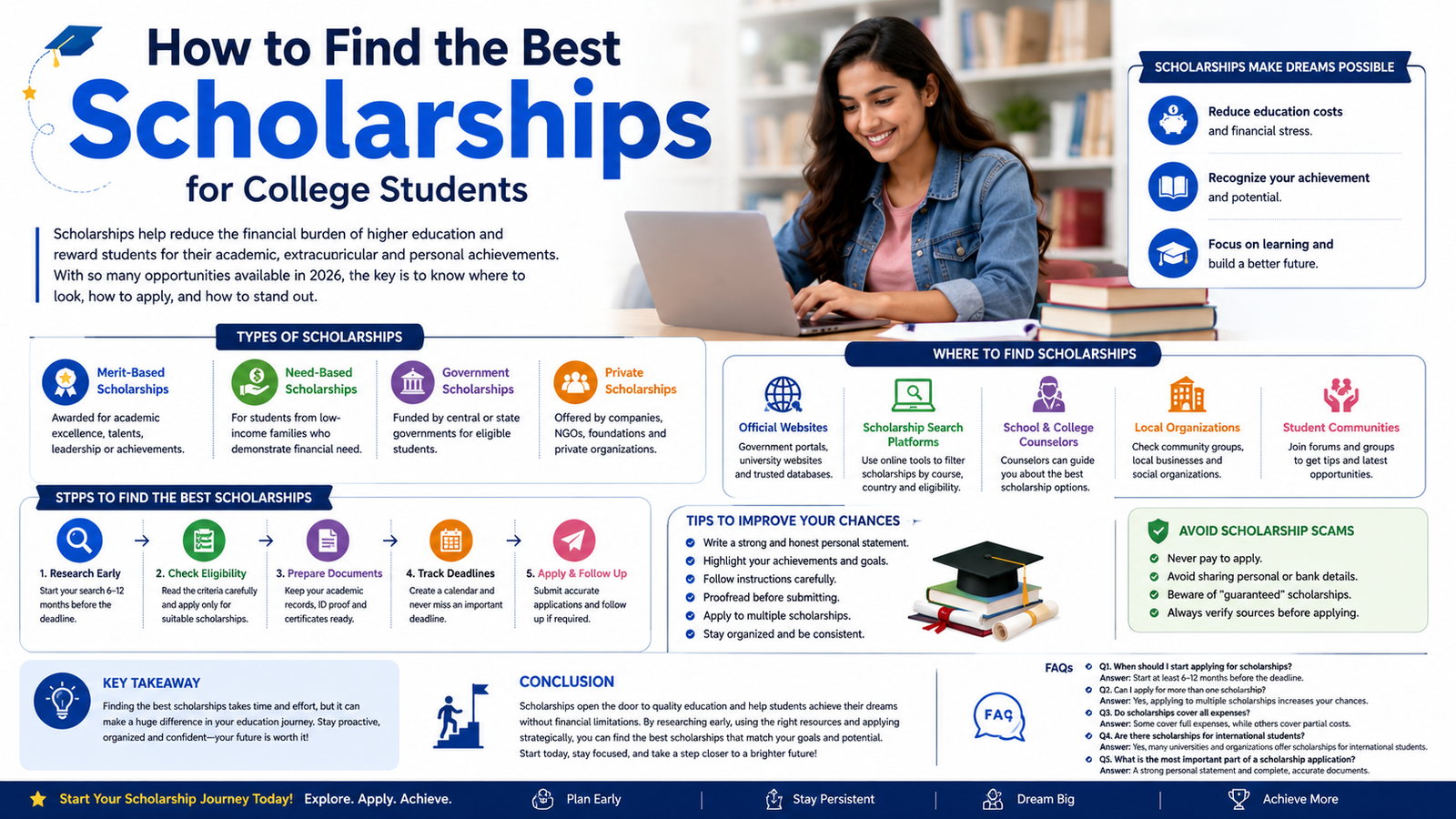
Discover the best scholarship opportunities for students worldwide. Learn how to find, apply, and secure scholarships with this complete step-by-step guide.
Education is one of the most powerful tools for shaping a successful future—but rising tuition fees often stand in the way. Scholarships provide a valuable solution by offering financial support based on merit, need, or talent. Whether you are a high school student, undergraduate, or postgraduate aspirant, understanding how to find and apply for scholarships can open doors to global opportunities.
In this complete guide, you’ll explore the top scholarship options and a practical step-by-step approach to securing them.
What Are Scholarships?
Scholarships are financial awards given to students to help cover educational expenses such as tuition, books, and living costs. Unlike loans, scholarships do not need to be repaid.
They are typically offered by:
- Governments
- Universities
- Private organizations
- Non-profits
Scholarships can be categorized into:
- Merit-based (academic, sports, arts)
- Need-based (financial background)
- Country-specific
- Course-specific
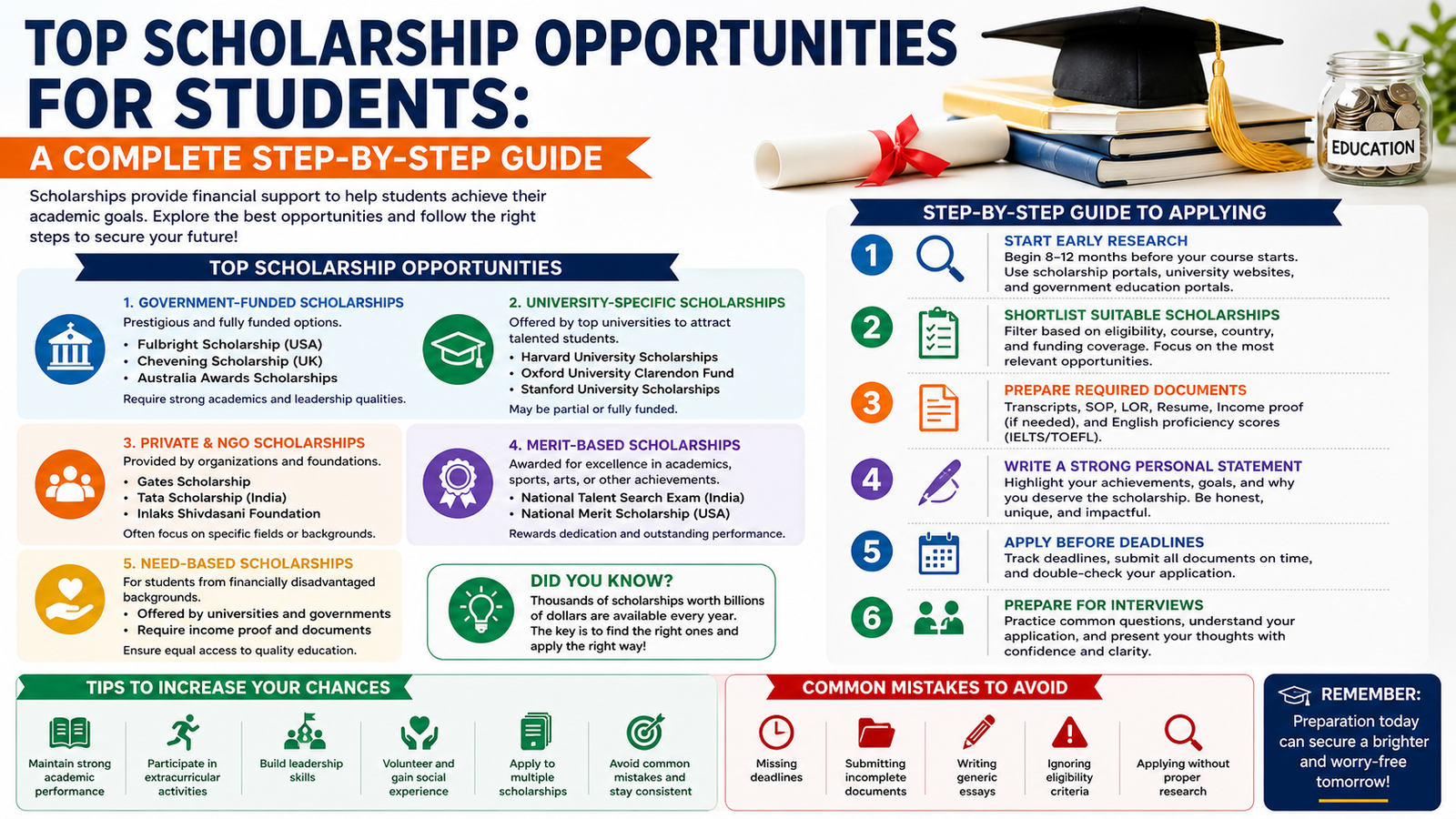
Top Scholarship Opportunities for Students
Here are some of the most popular and trusted scholarship programs worldwide:
1. Government-Funded Scholarships
Government scholarships are among the most prestigious and fully funded options.
- Fulbright Scholarship (USA) – Covers tuition, travel, and living expenses
- Chevening Scholarship (UK) – Fully funded for master’s degrees
- Australia Awards Scholarships – For students from developing countries
These scholarships often require strong academic records and leadership qualities.
2. University-Specific Scholarships
Many universities offer scholarships to attract talented students.
Examples include:
- Harvard University Scholarships
- Oxford University Clarendon Fund
- Stanford University Scholarships
These may be partial or fully funded and often consider academic excellence.
3. Private and NGO Scholarships
Private organizations and NGOs also provide excellent funding opportunities.
- Gates Scholarship
- Tata Scholarship (for Indian students)
- Inlaks Shivdasani Foundation Scholarships
These scholarships may focus on specific fields or student backgrounds.
4. Merit-Based Scholarships
Awarded to students with exceptional achievements in academics, sports, or arts.
- National Talent Search Examination (India)
- National Merit Scholarship (USA)
These scholarships reward dedication and performance.
5. Need-Based Scholarships
Designed for students from financially disadvantaged backgrounds.
- Offered by universities and government bodies
- Require income proof and financial documents
Step-by-Step Guide to Applying for Scholarships
Step 1: Start Early Research
Begin your search at least 8–12 months before your intended course start date.
Use platforms like:
- Scholarship portals
- University websites
- Government education portals
Step 2: Shortlist Suitable Scholarships
Filter scholarships based on:
- Eligibility criteria
- Course and country
- Funding coverage
Avoid applying randomly—focus on relevant opportunities.
Step 3: Prepare Required Documents
Most scholarship applications require:
- Academic transcripts
- Statement of Purpose (SOP)
- Letters of Recommendation (LOR)
- Resume/CV
- Proof of income (for need-based scholarships)
- English proficiency scores (IELTS/TOEFL)
Keep these ready in advance to avoid last-minute stress.
Step 4: Write a Strong Personal Statement
Your SOP or essay is a critical part of your application.
Tips:
- Highlight achievements and goals
- Explain why you deserve the scholarship
- Be honest and unique
- Avoid copying templates
Step 5: Apply Before Deadlines
Late applications are usually not accepted.
- Track deadlines carefully
- Submit all documents on time
- Double-check your application
Step 6: Prepare for Interviews
Some scholarships require interviews.
Prepare by:
- Practicing common questions
- Understanding your application
- Showing confidence and clarity
Tips to Increase Your Chances of Winning Scholarships
- Maintain strong academic performance
- Participate in extracurricular activities
- Build leadership skills
- Volunteer and gain social experience
- Apply to multiple scholarships
- Avoid common mistakes like incomplete applications
Consistency and preparation make a big difference.
Common Mistakes to Avoid
- Missing deadlines
- Submitting incomplete documents
- Writing generic essays
- Ignoring eligibility criteria
- Applying without proper research
Avoiding these mistakes can significantly improve your chances.
Conclusion
Scholarships can transform your educational journey by reducing financial stress and providing access to top institutions worldwide. While the process may seem competitive, the right strategy, preparation, and persistence can help you succeed.
Start early, stay organized, and focus on quality applications rather than quantity. With dedication and the right approach, securing a scholarship is absolutely achievable.
FAQs
1. Who can apply for scholarships?
Anyone meeting the eligibility criteria—students from school level to postgraduate studies—can apply.
2. Are scholarships fully funded?
Some scholarships cover all expenses, while others provide partial funding.
3. Can I apply for multiple scholarships?
Yes, applying to multiple scholarships increases your chances of success.
4. Do scholarships require high academic scores?
Not always. Some focus on financial need, leadership, or special talents.
5. When should I start applying for scholarships?
Ideally, start 8–12 months before your course begins.