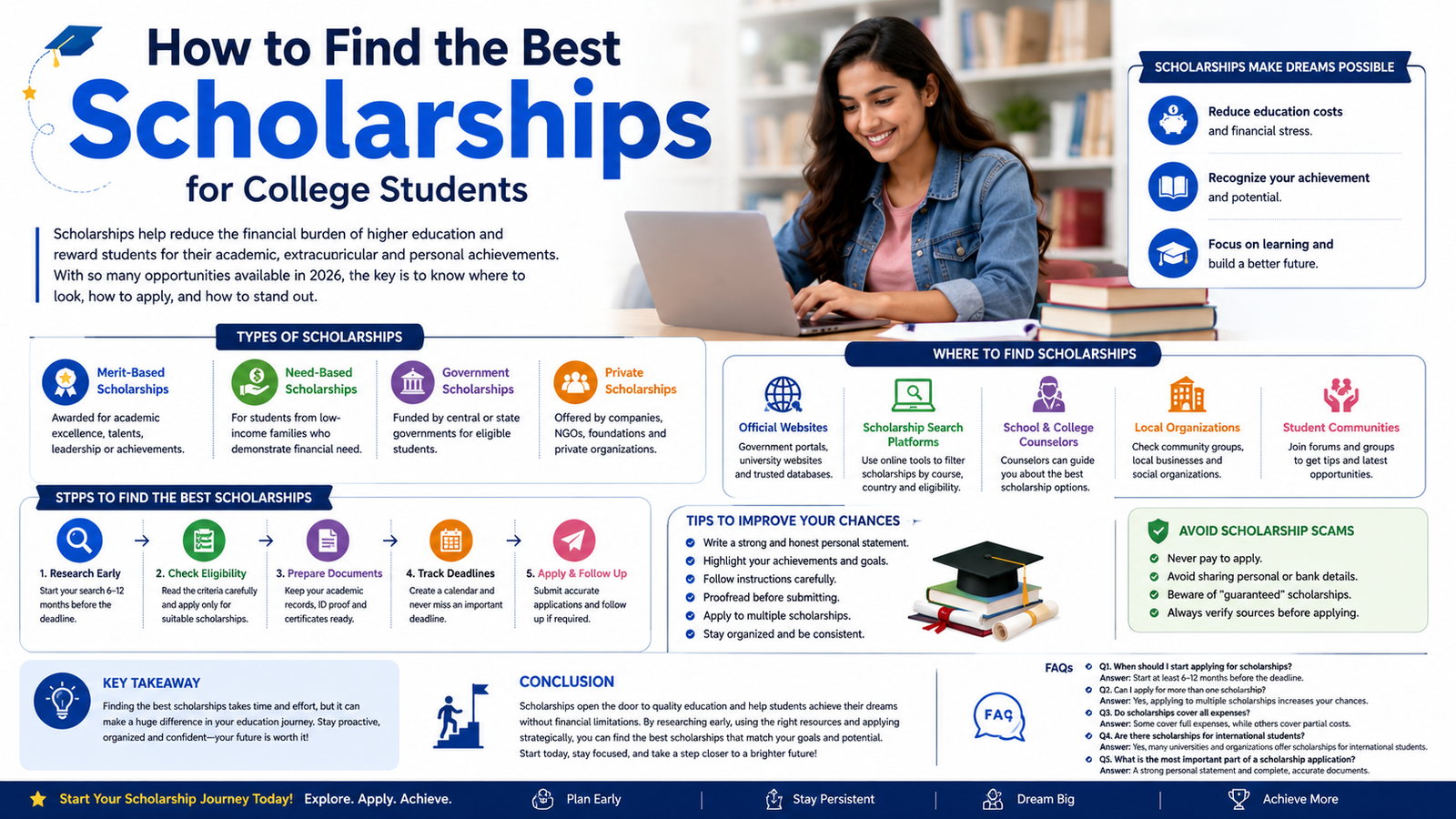
College education can open doors to better career opportunities, but it often comes with significant expenses. Tuition fees, books, accommodation, and daily living costs can create financial pressure for students and families. Scholarships help reduce this burden by providing financial support for education. For many students, scholarships make higher education more accessible and affordable.
Why Scholarships Are Important
Scholarships are valuable because they help students continue education without excessive financial stress.
Benefits of scholarships include:
- Reduced tuition costs
- Less dependence on loans
- Financial support for study materials
- Recognition for achievements
- Access to quality institutions
- More focus on studies
Scholarships encourage students to achieve academic goals while reducing financial barriers.
Understand Different Types of Scholarships
Knowing the types of scholarships available makes searching easier.
Merit-Based Scholarships
These are awarded based on academic performance or achievements.
Examples:
- High exam scores
- Academic excellence
- Sports achievements
- Arts or talent recognition
Need-Based Scholarships
These are designed for students from lower-income families.
Financial documents are usually required.
Government Scholarships
Many governments offer scholarship schemes for domestic and international students.
Private Scholarships
Private companies, NGOs, and foundations often provide scholarships.
These may focus on specific courses or communities.
Start Searching Early
One of the most effective ways to find scholarships is to start early.
Begin your search:
- Before college admission
- During the final year of school
- At least 6 to 12 months in advance
Early research provides enough time to gather documents and prepare strong applications.
Late applications often result in missed deadlines.
Use Official Scholarship Websites
Official scholarship websites are reliable sources of information.
Useful sources include:
- Government portals
- University websites
- Educational organizations
- International scholarship databases
Official websites provide accurate eligibility details, deadlines, and application instructions.
Always verify scholarship information before applying.
Check College Websites
Most colleges list scholarship programs directly on their websites.
These may include:
- Merit scholarships
- Financial aid
- Department scholarships
- Research grants
College websites often provide scholarships specifically for enrolled students.
This can be one of the easiest ways to find relevant opportunities.
Use Scholarship Search Platforms
Online scholarship search tools simplify the process.
These platforms allow students to search by:
- Course
- Country
- Academic level
- Financial need
- Category
Search platforms save time and help discover multiple opportunities quickly.
Using filters makes finding relevant scholarships easier.
Ask School or College Counselors
Academic counselors often know about scholarship programs.
They can guide students on:
- Available options
- Eligibility
- Application process
- Required documents
Many scholarships are shared through schools before appearing elsewhere.
Counselors can provide helpful recommendations.
Explore Government Scholarship Programs
Government scholarships are among the most trusted options.
Examples may include:
- National scholarships
- State scholarships
- Minority scholarships
- International exchange scholarships
Government programs often have transparent application systems.
They can significantly reduce education costs.
Search for Private Organization Scholarships
Many private companies and foundations support education.
Examples include scholarships offered by:
- Corporate foundations
- NGOs
- Professional associations
- Charitable trusts
Private scholarships may target specific fields such as engineering, medicine, or arts.
These can be excellent opportunities.
Look for Local Scholarships
Local organizations often provide scholarships that many students overlook.
Examples:
- Community organizations
- Local businesses
- Religious institutions
- Social groups
Because fewer students apply, local scholarships may be easier to win.
They are worth researching.
Join Scholarship Forums and Student Communities
Student communities can provide useful information.
Join:
- Online forums
- Social groups
- Student communities
- Education discussion platforms
Students often share current opportunities and practical advice.
Community discussions can help identify scholarships that are not widely advertised.
Prepare Necessary Documents
Once you identify scholarships, prepare documents early.
Common requirements include:
- Academic transcripts
- ID proof
- Income certificate
- Admission proof
- Personal statement
- Recommendation letters
Having documents ready helps apply quickly.
It also reduces errors.
Create a Scholarship Calendar
Tracking deadlines is essential.
Your calendar should include:
- Scholarship name
- Deadline
- Required documents
- Application status
- Interview dates
Organization prevents missed opportunities.
Use mobile apps or planners for reminders.
Apply to Multiple Scholarships
Do not depend on one scholarship.
Apply for several opportunities that match your eligibility.
This improves your chances of success.
Many students apply to:
- Government scholarships
- University scholarships
- Private grants
- International scholarships
More applications increase possibilities.
Avoid Scholarship Scams
Students should be cautious when searching online.
Warning signs include:
- Upfront payment requests
- Requests for confidential details
- Unofficial websites
- Guaranteed approval promises
Legitimate scholarships do not require payment.
Always verify sources.
Tips to Improve Success
To improve scholarship opportunities:
- Apply early
- Follow instructions carefully
- Write strong essays
- Check eligibility
- Submit complete documents
- Stay organized
Preparation increases success.
Consistency matters.
Conclusion
Finding the best scholarships for college students requires early research, organization, and persistence. By using official websites, college resources, government programs, and scholarship search tools, students can discover many valuable opportunities.
Scholarships reduce financial stress and help students focus on achieving academic goals. The key is to start early, apply to multiple programs, and stay organized throughout the process.
With the right strategy, scholarships can make higher education more affordable and accessible for students in 2026.
FAQs
1.When should students start searching for scholarships?
Students should start searching 6 to 12 months before college admission.
2.Where can students find scholarships?
Students can search through government portals, university websites, and scholarship databases.
3.Can students apply for multiple scholarships?
Yes, applying for multiple scholarships increases chances of receiving aid.
4.Are local scholarships useful?
Yes, local scholarships often have less competition and can be easier to secure.
5.How can I avoid scholarship scams?
Use official websites, avoid paying fees, and verify all information before applying.