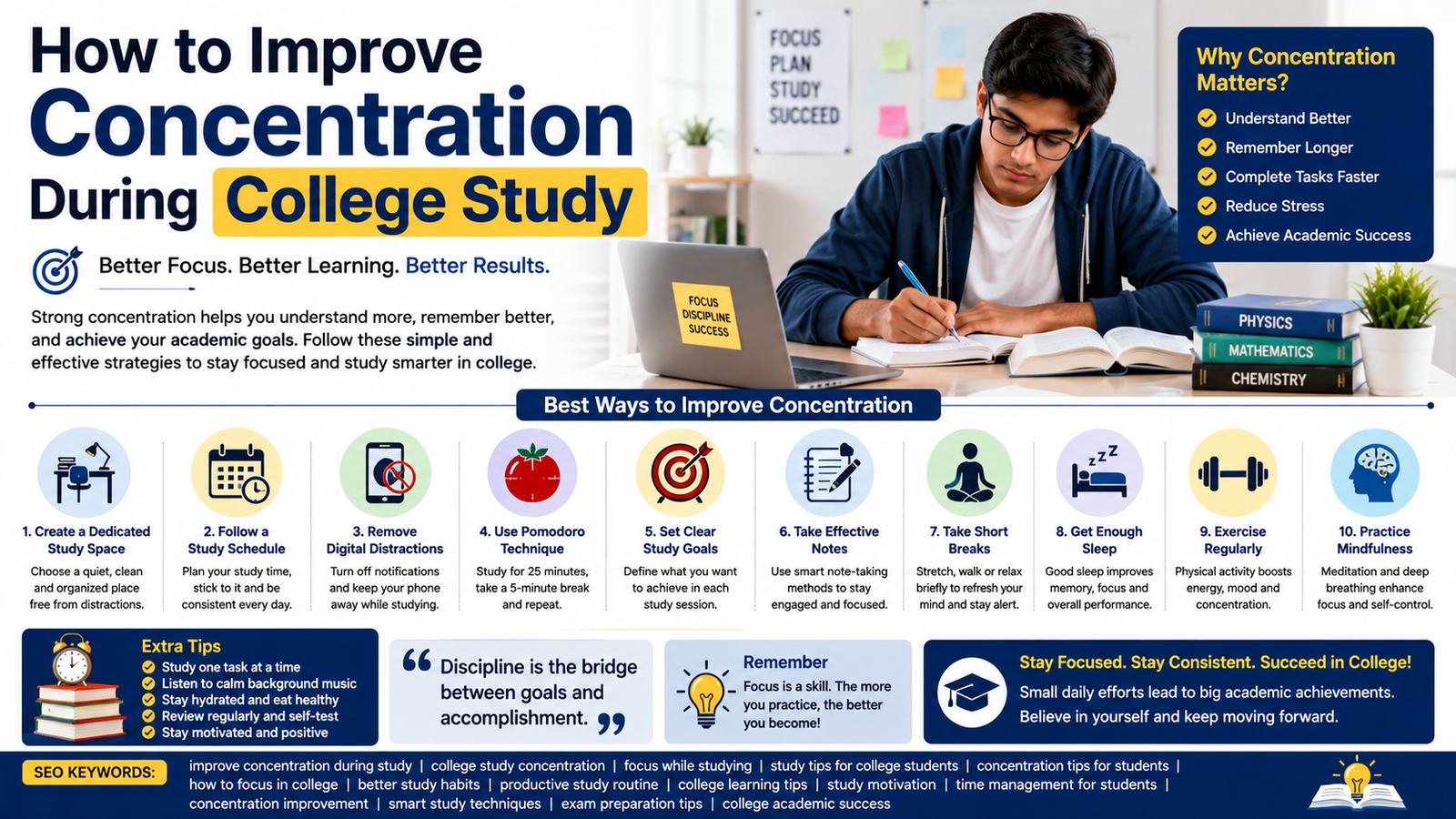
Concentration is one of the most important factors for academic success. In college, students often face distractions such as social media, busy schedules, part-time jobs, and personal responsibilities. Even motivated students may struggle to stay focused during long study sessions.
Why Concentration Matters in College
College study requires attention, understanding, and consistency. Without concentration, students may spend many hours studying but remember very little.
Strong concentration helps students:
- Learn faster
- Understand complex topics
- Retain information
- Complete work efficiently
- Reduce study stress
Improved focus can lead to better grades and confidence.
Create a Dedicated Study Space
Your environment affects concentration. A proper study area can improve focus significantly.
An effective study space should have:
- Good lighting
- Comfortable seating
- Minimal noise
- Organized desk
- Necessary study materials
A clean and quiet environment reduces distractions.
Follow a Study Schedule
Studying at random times often leads to poor focus. A consistent schedule trains the brain to concentrate.
Tips:
- Study at the same time daily
- Set realistic hours
- Prioritize difficult subjects
- Include breaks
- Track progress
Consistency helps improve mental discipline.
Remove Digital Distractions
Phones and social media are major distractions for college students.
Ways to reduce interruptions:
- Turn off notifications
- Use focus apps
- Put phone away
- Block distracting websites
- Use silent mode
Reducing digital distractions improves productivity.
Use the Pomodoro Technique
The Pomodoro method is highly effective for concentration.
How it works:
- Study for 25 minutes
- Take a 5-minute break
- Repeat 4 times
- Take a longer break
This method keeps the mind fresh and focused.
Set Clear Study Goals
Clear goals help maintain concentration.
Examples:
- Finish one chapter
- Complete practice questions
- Review notes
- Solve assignments
- Prepare for one topic
Goals provide direction and reduce wasted time.
Study One Task at a Time
Multitasking lowers concentration.
Avoid:
- Studying while texting
- Watching videos during reading
- Switching subjects constantly
- Checking social media
Single-tasking improves efficiency and understanding.
Take Effective Notes
Writing organized notes keeps students engaged.
Useful methods:
Cornell Method
Divide notes into sections for easier review.
Mind Mapping
Connect ideas visually.
Digital Notes
Use apps to organize and search information.
Good notes improve revision and concentration.
Practice Active Learning
Passive reading often reduces focus. Active learning keeps the brain engaged.
Methods include:
- Summarizing
- Teaching others
- Asking questions
- Solving problems
- Discussion groups
Active learning improves memory retention.
Take Short Breaks
Long study sessions can cause fatigue.
Break activities:
- Walk briefly
- Stretch
- Drink water
- Deep breathing
- Rest eyes
Short breaks improve concentration during longer sessions.
Get Enough Sleep
Sleep directly affects focus.
Benefits of proper sleep:
- Better memory
- Improved concentration
- Higher energy
- Reduced stress
- Better decision-making
Students should aim for 7–8 hours of sleep.
Maintain Healthy Nutrition
Food affects brain performance.
Helpful foods:
- Fruits
- Nuts
- Whole grains
- Vegetables
- Water
Avoid excessive junk food and sugary drinks before studying.
Exercise Regularly
Physical activity improves brain function.
Benefits:
- Better blood flow
- Reduced stress
- Improved mood
- Increased energy
- Better concentration
Even short walks can help.
Use Background Music Carefully
Some students concentrate better with soft instrumental music.
Best options:
- Classical music
- Nature sounds
- White noise
- Instrumental playlists
Avoid songs with distracting lyrics.
Practice Meditation
Meditation improves focus over time.
Simple routine:
- Sit quietly
- Focus on breathing
- Practice 5–10 minutes daily
Meditation strengthens attention.
Limit Study Session Length
Very long sessions reduce effectiveness.
Recommended:
- 1–2 hours with breaks
- Subject rotation
- Daily review
- Balanced workload
Quality matters more than quantity.
Stay Motivated
Motivation improves concentration.
Ways to stay motivated:
- Reward progress
- Track achievements
- Study with purpose
- Remember goals
- Stay positive
Motivation supports consistency.
Use Technology Wisely
Educational tools can improve concentration.
Examples:
- Flashcard apps
- AI study assistants
- Focus timers
- Online planners
- Digital note apps
Use technology as support, not distraction.
Study With Friends Occasionally
Group study can improve focus when structured.
Benefits:
- Shared learning
- Clarification
- Accountability
- Motivation
- Discussion
Choose serious study partners.
Practice Mindfulness
Mindfulness helps students stay present while studying.
Techniques:
- Focus on current task
- Avoid overthinking
- Control distractions
- Stay aware of habits
Mindfulness improves mental control.
Review Regularly
Regular review prevents information overload.
Best approach:
- Daily review
- Weekly revision
- Practice testing
- Spaced repetition
Review improves long-term concentration.
Conclusion
Improving concentration during college study is essential for academic success. Students who create structured routines, remove distractions, and use active study methods can learn more effectively and reduce stress. Concentration is not just about working harder but about creating the right environment and habits.
In 2026, students have many tools to support learning, but strong focus remains a personal skill. By applying these techniques consistently, college students can improve productivity, understand topics better, and achieve stronger academic results.
FAQs
1. How can college students improve concentration while studying?
Creating a quiet study space, removing distractions, and following a schedule are effective methods.
2. Does sleep affect concentration?
Yes, lack of sleep reduces memory, focus, and learning ability.
3. Is the Pomodoro technique useful?
Yes, it helps students stay focused by dividing study into manageable sessions.
4. Can exercise improve concentration?
Yes, regular physical activity improves brain function and focus.
5. How long should a study session be?
Most students benefit from focused sessions of 25–60 minutes with breaks.