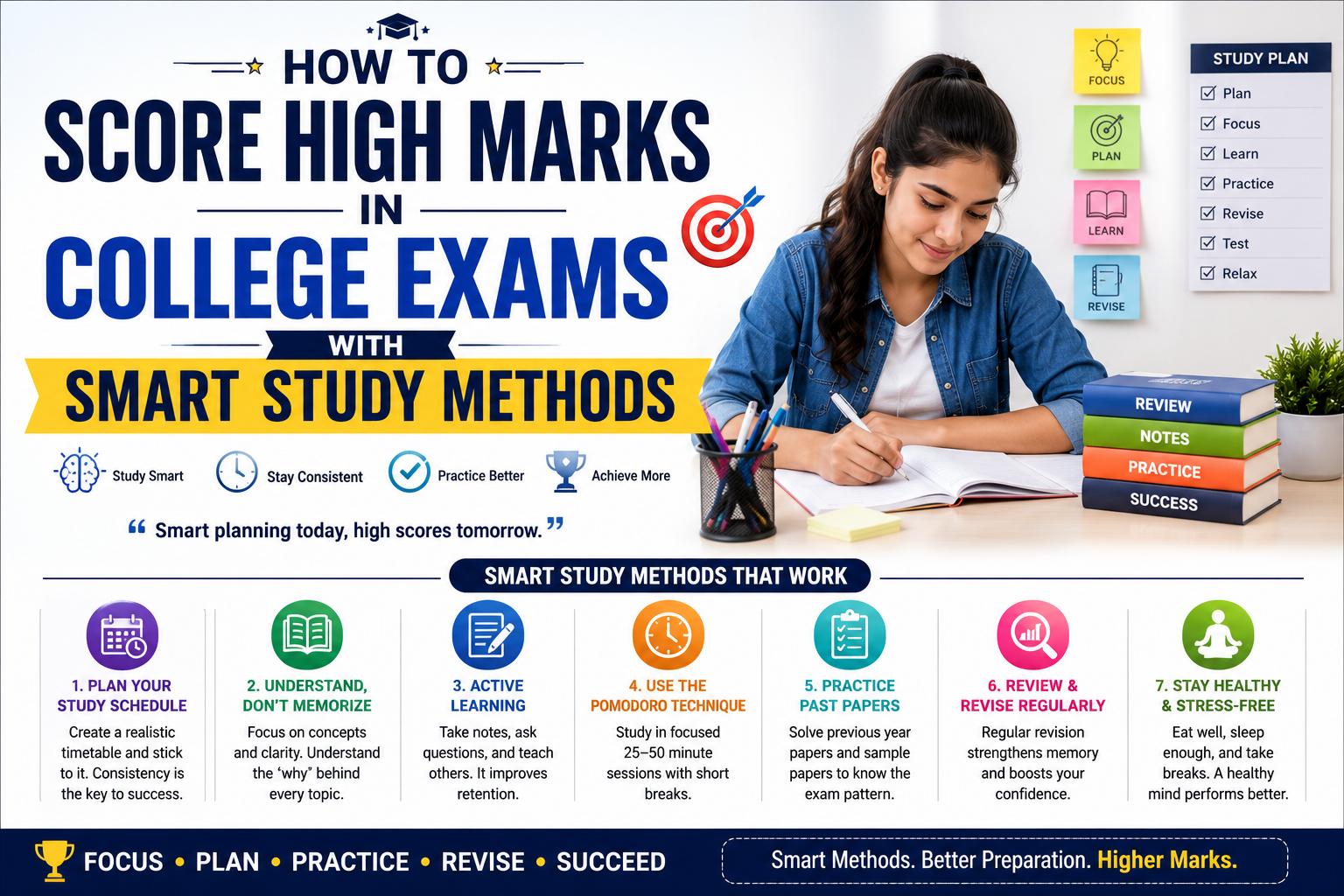
Scoring high marks in college exams is not just about studying harder—it is about studying smarter. Many students spend long hours with books but still struggle to achieve good results because they do not follow effective study strategies.
Understand the Syllabus and Exam Pattern
Before starting preparation, it is important to understand the syllabus and exam pattern thoroughly. Many students make the mistake of studying without knowing what is important.
Go through the syllabus carefully and identify high-weightage topics. Analyze previous year question papers to understand frequently asked questions.
This helps you focus on important areas instead of wasting time on less relevant topics.
Create a Smart Study Plan
A well-structured study plan is essential for academic success. Divide your syllabus into small sections and assign daily or weekly goals.
Instead of studying randomly, follow a fixed timetable that includes revision time and practice sessions.
A smart study plan ensures balanced preparation and helps avoid last-minute stress before exams.
Use Active Learning Techniques
Active learning is one of the most powerful study methods. Instead of just reading textbooks, engage with the material actively.
You can use techniques like:
- Writing notes in your own words
- Teaching concepts to someone else
- Solving practice questions
- Creating mind maps and diagrams
These methods improve understanding and long-term memory retention.
Focus on Concept Clarity, Not Memorization
Many students try to memorize everything, which is not effective for long-term success. Instead, focus on understanding concepts clearly.
Once you understand the logic behind a topic, it becomes easier to remember and apply in exams.
Concept clarity also helps in answering tricky and application-based questions.
Practice Regularly with Mock Tests
Regular practice is key to scoring high marks. Solve previous year question papers and take mock tests under exam-like conditions.
This improves your speed, accuracy, and confidence.
Mock tests also help you identify weak areas so you can improve before the final exam.
Improve Time Management Skills
Time management plays a major role in exam success. Many students know answers but fail to complete the paper on time.
While studying, practice answering questions within a time limit. Prioritize important topics and allocate more time to difficult subjects.
Good time management reduces stress and improves performance during exams.
Take Effective Notes
Well-organized notes are extremely helpful during revision. Instead of copying everything from books, write short and clear notes in your own language.
Use bullet points, diagrams, and keywords to make revision faster and easier.
These notes become very useful during last-minute exam preparation.
Avoid Distractions While Studying
Distractions like mobile phones, social media, and unnecessary interruptions reduce study efficiency.
Choose a quiet place for studying and set specific study hours. You can also use techniques like the Pomodoro method (study for 25–50 minutes, then take a short break).
A focused study environment improves concentration and productivity.
Revise Regularly
Revision is one of the most important parts of exam preparation. Without revision, it is easy to forget what you studied earlier.
Set aside weekly revision time to go through important topics and notes.
Regular revision strengthens memory and improves confidence before exams.
Conclusion
Scoring high marks in college exams is possible with the right approach and discipline. Smart study methods like planning, active learning, regular revision, and time management can significantly improve academic performance.
Instead of studying harder, students should focus on studying smarter. With consistency and proper strategy, every student can achieve excellent results in their college exams.
FAQs
1. What are smart study methods for college students?
Smart study methods include active learning, planning, revision, practice tests, and focusing on understanding concepts instead of memorizing.
2. How can I score high marks in college exams?
You can score high marks by creating a study plan, practicing regularly, managing time effectively, and revising consistently.
3. How many hours should I study daily in college?
It depends on your schedule, but 3–6 focused hours of study daily is usually effective if done consistently.
4. What is the best way to revise for exams?
The best way is to use short notes, summaries, and regular revision sessions instead of last-minute cramming.
5. How can I improve concentration while studying?
Avoid distractions, use a quiet study space, and follow techniques like Pomodoro to improve focus.