Discover the most common mistakes students make during college admissions and learn how to avoid them. A complete guide to improve your chances of getting accepted into your dream college.
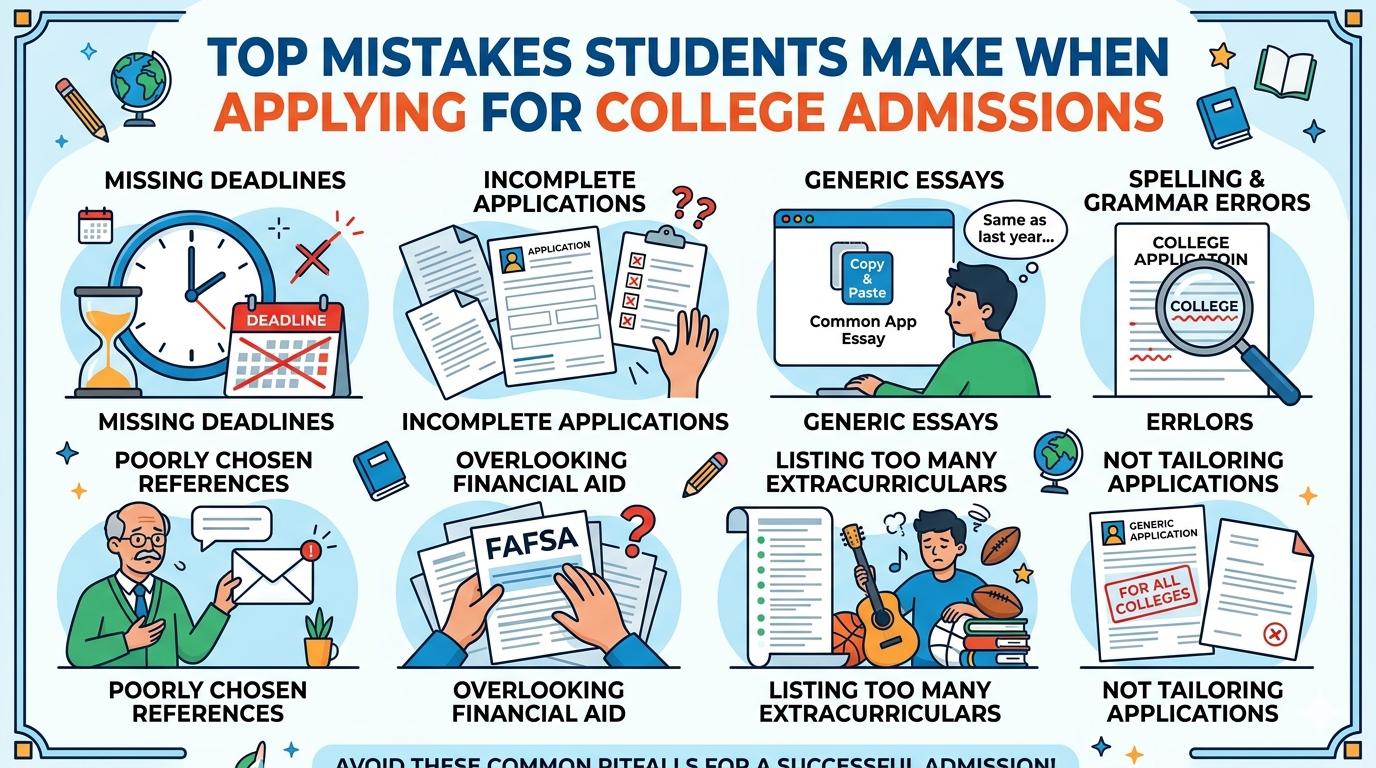
Applying for college is one of the most important milestones in a student’s academic journey. It can shape your career path, personal growth, and future opportunities. However, many students make avoidable mistakes during the college admissions process that can reduce their chances of acceptance—even if they are academically strong.
From poor planning to weak application essays, these mistakes can cost students valuable opportunities. Understanding what not to do is just as important as knowing what to do. In this article, we’ll explore the most common mistakes students make when applying for college admissions and how you can avoid them.
1. Procrastinating the Application Process
One of the biggest mistakes students make is waiting until the last minute to start their college applications. Procrastination leads to rushed work, missed deadlines, and incomplete submissions.
When you delay:
- You have less time to research colleges properly
- Your essays may lack depth and clarity
- You risk missing important deadlines
How to avoid it:
Start early. Create a timeline for each step—research, exams, essays, and submissions. Planning ahead ensures you submit a polished and complete application.
2. Not Researching Colleges Properly
Many students apply to colleges without fully understanding what those institutions offer. They often choose colleges based only on reputation, peer pressure, or rankings.
This can lead to:
- Applying to colleges that don’t match your goals
- Wasting application fees
- Ending up in an unsuitable academic environment
How to avoid it:
Research each college’s courses, campus culture, faculty, and placement opportunities. Make sure the college aligns with your academic and career goals.
3. Applying to Too Few or Too Many Colleges
Some students apply to only one or two colleges, putting all their hopes in limited options. Others apply to too many colleges without focusing on quality.
Problems include:
- Too few applications = higher risk of rejection
- Too many applications = lack of attention to each application
How to avoid it:
Create a balanced list:
- Dream colleges (ambitious)
- Match colleges (realistic)
- Safety colleges (backup options)
4. Weak or Generic Personal Statement
Your personal statement or college essay is your chance to stand out. Unfortunately, many students submit generic essays that fail to reflect their personality.
Common issues:
- Writing what you think colleges want to hear
- Lack of originality
- Poor structure or grammar
How to avoid it:
Be authentic. Share your real experiences, challenges, and achievements. Make your story unique and meaningful.
5. Ignoring Application Instructions
Every college has specific application requirements. Ignoring instructions can lead to disqualification or rejection.
Examples:
- Exceeding word limits
- Missing required documents
- Not following formatting guidelines
How to avoid it:
Read instructions carefully and double-check your application before submission.
6. Not Preparing for Entrance Exams Properly
Entrance exams play a crucial role in college admissions. Many students underestimate their importance or start preparing too late.
Mistakes include:
- Lack of consistent study plan
- Ignoring mock tests
- Weak time management
How to avoid it:
Start early, follow a structured study plan, and practice regularly with mock exams.
7. Submitting Incomplete Applications
An incomplete application can instantly reduce your chances of admission.
Missing items may include:
- Transcripts
- Recommendation letters
- Test scores
How to avoid it:
Create a checklist of required documents and ensure everything is submitted before the deadline.
8. Choosing the Wrong Referees
Recommendation letters are an important part of your application. Choosing someone who doesn’t know you well can result in weak or generic recommendations.
How to avoid it:
Select teachers or mentors who:
- Know your strengths and achievements
- Can provide detailed and positive feedback
9. Overlooking Proofreading
Spelling and grammar errors in your application can create a negative impression.
Common issues:
- Typos in essays
- Incorrect information
- Poor formatting
How to avoid it:
Proofread multiple times. Ask a teacher, mentor, or friend to review your application.
10. Focusing Only on Academics
While academic performance is important, colleges also look for well-rounded students.
Ignoring extracurricular activities can weaken your application.
How to avoid it:
Highlight your:
- Leadership roles
- Volunteer work
- Sports or creative activities
11. Not Demonstrating Interest
Some students fail to show genuine interest in the colleges they apply to.
How to avoid it:
- Attend college webinars or open days
- Mention specific programs in your essay
- Show why you are a good fit
12. Financial Planning Mistakes
Many students overlook financial planning until the last moment.
Problems include:
- Not applying for scholarships
- Ignoring tuition costs
- Lack of budgeting
How to avoid it:
Research scholarships, financial aid options, and plan your budget in advance.
13. Letting Others Control Your Decisions
Parents, friends, or relatives may influence your college choice, but blindly following others can lead to dissatisfaction.
How to avoid it:
Make informed decisions based on your own interests, goals, and abilities.
14. Missing Deadlines
Deadlines are strict in college admissions. Missing even one can mean losing your chance.
How to avoid it:
Use a calendar or planner to track all deadlines and set reminders.
15. Lack of Confidence
Many students underestimate themselves and hesitate to apply to competitive colleges.
How to avoid it:
Believe in your abilities and apply confidently. Rejections are part of the process, but not trying is the biggest mistake.
Conclusion
The college admissions process can be overwhelming, but avoiding common mistakes can significantly improve your chances of success. From starting early and researching colleges to submitting complete and well-prepared applications, every step matters.
Remember, college admissions are not just about grades—they are about presenting your best self. Stay organized, be authentic, and plan strategically. With the right approach, you can secure admission to a college that aligns with your dreams and aspirations.
FAQs
1. When should I start preparing for college admissions?
You should ideally start preparing at least 12–18 months before application deadlines to ensure enough time for research and preparation.
2. How many colleges should I apply to?
A balanced list of 6–10 colleges (including dream, match, and safety options) is generally recommended.
3. What makes a strong college application?
A strong application includes good academic performance, a compelling personal statement, extracurricular activities, and strong recommendation letters.
4. Can a weak essay affect my admission chances?
Yes, a poorly written essay can reduce your chances, especially in competitive colleges where essays play a crucial role.
5. How important are extracurricular activities?
Extracurricular activities are very important as they show your skills, interests, leadership, and overall personality beyond academics.