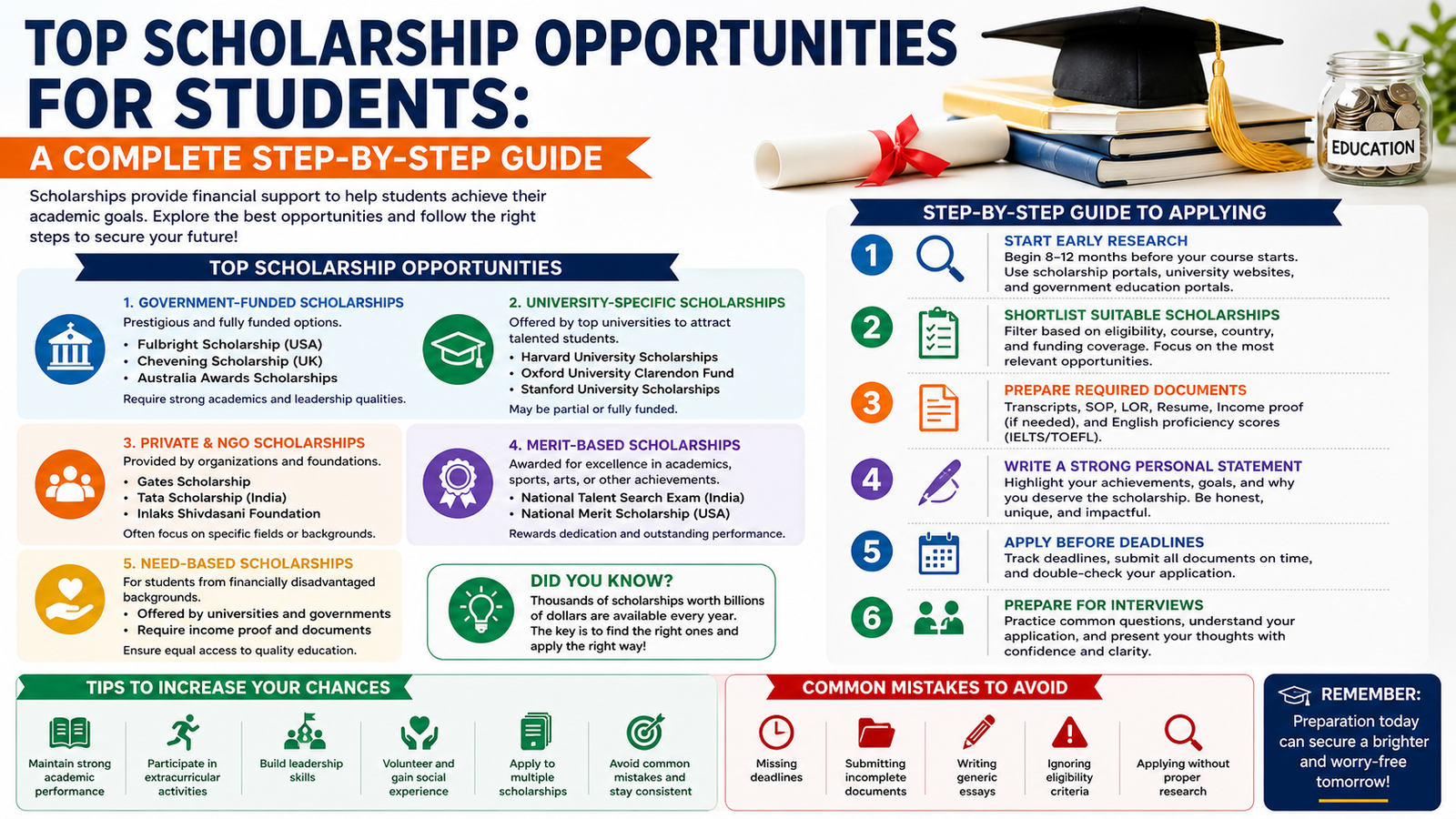
Discover proven strategies to increase your chances of getting a scholarship easily. Learn eligibility tips, application secrets, and expert advice to secure funding for your education.
Getting a scholarship can feel competitive and overwhelming, especially when thousands of students apply for limited opportunities. However, the idea that scholarships are only for top-ranking students or exceptionally talented individuals is a myth. With the right approach, preparation, and strategy, anyone can significantly improve their chances of securing financial aid.
Scholarships are not just about academic excellence—they also consider leadership qualities, extracurricular involvement, personal achievements, and even your ability to present your story effectively. This article will guide you step by step on how to increase your chances of getting a scholarship easily, even if you are starting from scratch.
1. Start Your Research Early
One of the biggest mistakes students make is starting their scholarship search too late. Scholarships have deadlines, and many of them close months before the academic year begins.
Start researching at least 8–12 months in advance. Look for:
- Government scholarships
- Private organization scholarships
- College-specific scholarships
- International funding programs
Make a list of deadlines, requirements, and eligibility criteria so you don’t miss any opportunity.
2. Understand Eligibility Criteria Carefully
Every scholarship has its own requirements. Some are based on merit, others on financial need, and some focus on specific skills or backgrounds.
Before applying, ensure:
- You meet academic requirements
- Your age and nationality match criteria
- Required documents are ready
Applying for scholarships you’re not eligible for wastes time and reduces your overall success rate.
3. Maintain Strong Academic Performance
While not all scholarships require top grades, having a solid academic record increases your chances significantly.
Tips to improve academics:
- Stay consistent with study schedules
- Focus on core subjects
- Seek help when needed
Even moderate improvement in grades can make a difference in competitive applications.
4. Build a Strong Profile Beyond Academics
Scholarship committees look for well-rounded individuals. Your extracurricular activities can set you apart from other applicants.
Consider participating in:
- Sports
- Cultural events
- Volunteering
- Leadership roles
- Internships
These activities show initiative, teamwork, and leadership—qualities that scholarship providers value highly.
5. Write a Powerful Personal Statement
Your personal statement is one of the most important parts of your application. It’s your chance to tell your story and explain why you deserve the scholarship.
Key tips:
- Be honest and authentic
- Highlight your achievements
- Explain your goals clearly
- Show how the scholarship will help you
Avoid generic statements. Make it personal and impactful.
6. Get Strong Letters of Recommendation
Recommendation letters add credibility to your application. Choose referees who know you well and can speak positively about your abilities.
Best choices include:
- Teachers or professors
- School principals
- Mentors or supervisors
Provide them with enough time and information so they can write a strong and personalized letter.
7. Apply to Multiple Scholarships
Don’t rely on just one scholarship. Increase your chances by applying to multiple opportunities.
Even smaller scholarships can add up and significantly reduce your financial burden. Treat each application seriously and customize it according to the requirements.
8. Stay Organized
Managing multiple applications can be challenging. Staying organized helps you avoid missing deadlines or submitting incomplete applications.
Use:
- A spreadsheet for tracking deadlines
- Folders for documents
- Reminders for submission dates
Being organized reflects professionalism and reduces stress.
9. Focus on Presentation
First impressions matter. A well-presented application stands out.
Make sure:
- There are no spelling or grammar mistakes
- Documents are properly formatted
- All required sections are complete
A clean and professional application increases your credibility.
10. Prepare for Interviews
Some scholarships require an interview. This is your opportunity to showcase your personality and communication skills.
Prepare by:
- Practicing common questions
- Researching the scholarship provider
- Dressing professionally
- Speaking confidently
Confidence and clarity can leave a lasting impression.
11. Highlight Financial Need (If Applicable)
For need-based scholarships, clearly explain your financial situation. Provide accurate documents and be transparent.
Explain:
- Your family background
- Educational expenses
- Why you need financial support
Honesty is crucial—never exaggerate or provide false information.
12. Avoid Common Mistakes
Many applicants lose opportunities due to simple errors.
Avoid:
- Missing deadlines
- Submitting incomplete forms
- Copy-pasting essays
- Ignoring instructions
Attention to detail can significantly improve your chances.
13. Use Online Scholarship Platforms
Many websites and portals list scholarships based on your profile. Use these platforms to discover opportunities you might not find otherwise.
Create a profile, set alerts, and regularly check for updates.
14. Stay Motivated and Persistent
Rejection is part of the process. Not getting selected for one scholarship doesn’t mean you won’t get another.
Keep applying, improving your profile, and learning from feedback. Persistence often leads to success.
15. Tailor Each Application
Avoid sending the same application everywhere. Customize each one based on the scholarship’s requirements and goals.
Show that:
- You understand the organization’s mission
- Your goals align with theirs
Personalized applications have a higher success rate.
Conclusion
Getting a scholarship may seem difficult, but with the right strategy, it becomes much more achievable. The key lies in early preparation, understanding requirements, building a strong profile, and presenting yourself effectively.
Focus on your strengths, stay organized, and apply consistently. Remember, scholarships are not just for perfect students—they are for determined individuals who are willing to put in the effort.
With dedication, planning, and persistence, you can significantly increase your chances of getting a scholarship easily and take a big step toward achieving your educational dreams.
FAQs
1. Can average students get scholarships?
Yes, many scholarships consider factors beyond academics, such as extracurricular activities, leadership, and financial need.
2. When should I start applying for scholarships?
It’s best to start at least 8–12 months before your course begins.
3. How many scholarships should I apply for?
Apply to as many as you qualify for to increase your chances.
4. What is the most important part of a scholarship application?
Your personal statement and overall profile play a crucial role.
5. Do I need perfect grades to win a scholarship?
No, many scholarships focus on overall performance, not just grades.