Introduction
Applying for scholarships has never been easier, thanks to the rise of digital platforms. But while the process is more accessible, it’s also more competitive. Thousands of students are submitting online scholarship applications for the same awards — and the ones who succeed are those who approach the process strategically. This step-by-step guide will walk you through exactly how to navigate online scholarship applications and maximize your chances of success.
Why Online Scholarship Applications Matter More Than Ever
The shift to digital application systems has made scholarships accessible to students in even the most remote parts of the world. All you need is an internet connection and the right documents. However, this also means that scholarship committees are reviewing more applications than ever before — making it crucial to stand out.
A poorly submitted online scholarship application — with missing documents, weak essays, or careless errors — will be rejected quickly. But a well-prepared, complete, and compelling application will rise to the top.
Step 1: Research and Create a Scholarship List
Before you start filling out any forms, do your research. Create a spreadsheet or list of scholarships you’re eligible for, including:
- Scholarship name
- Eligibility criteria
- Required documents
- Application deadline
- Award amount
Prioritize scholarships where you most closely match the eligibility criteria and values of the organization.
Best Resources for Finding Scholarships Online:
- Opportunity Desk (opportunitydesk.org) — great for international opportunities
- Fastweb (fastweb.com) — comprehensive US-based database
- ScholarshipPortal.eu — for European scholarships
- Scholars4Dev — for developing country students
- Your university’s financial aid portal
Step 2: Gather All Required Documents Before Starting
Nothing derails an online scholarship application faster than missing documents. Before opening a single application form, collect:
- Academic transcripts (official and unofficial)
- Language test scores (IELTS, TOEFL, DELF, etc.)
- Passport or national ID copy
- Letters of recommendation (get these early — recommenders need time!)
- CV or resume
- Personal statement or motivation letter
- Proof of income or financial need (for need-based scholarships)
- Research proposal (for postgraduate research scholarships)
- Portfolio (for arts/design scholarships)
Scan all physical documents and save them as clear, high-resolution PDFs.
Step 3: Create a Strong Online Profile
Many scholarship portals require you to create a profile before applying. Fill this out completely and accurately. Use a professional photo if required, and make sure your name, contact details, and educational history match your official documents exactly.
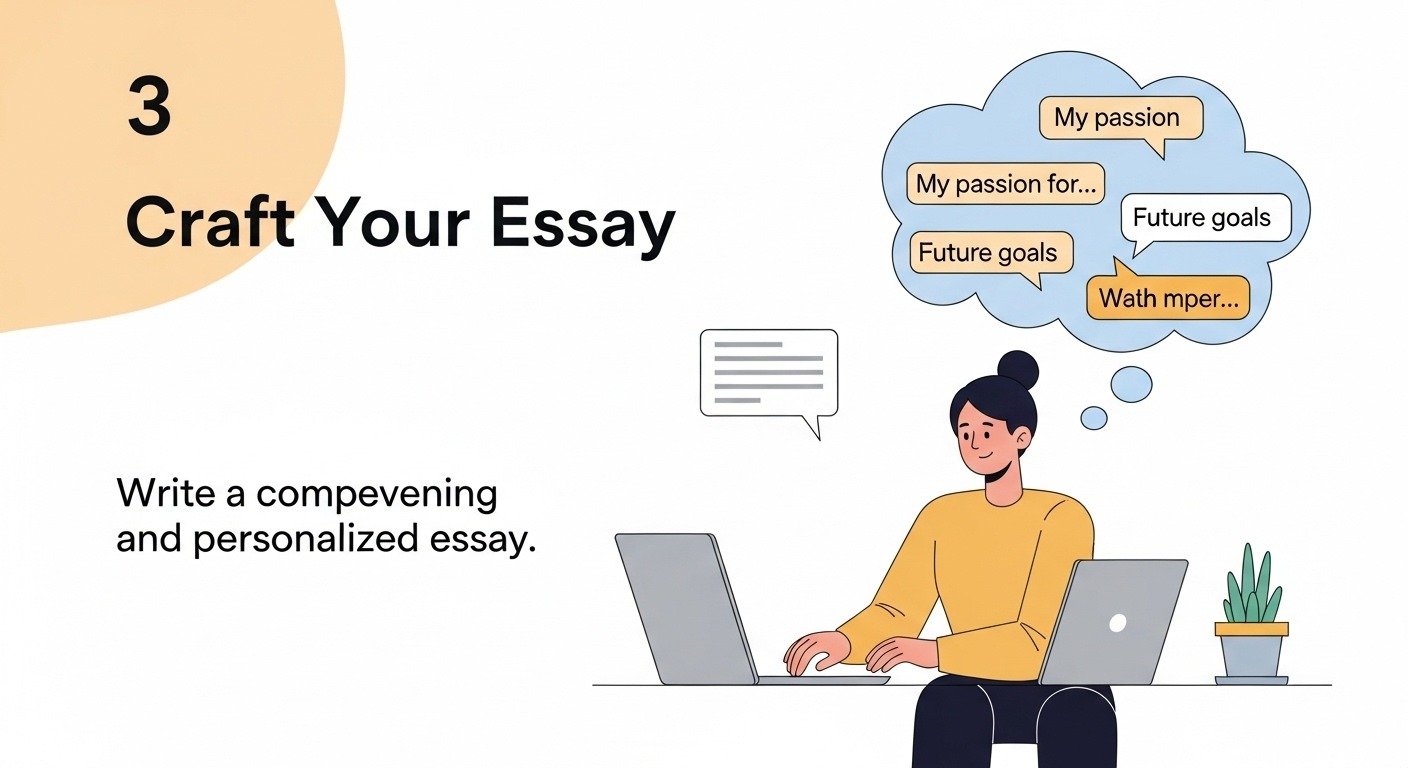
Step 4: Write Your Personal Statement
This is often the most important part of your online scholarship application. Your personal statement should:
- Be written in your own authentic voice
- Clearly state your academic and career goals
- Explain why you deserve this particular scholarship
- Highlight achievements that aren’t obvious from your transcripts
- Demonstrate awareness of the scholarship’s mission and values
Structure your personal statement as follows:
- Hook – A compelling opening that grabs attention
- Background – Brief academic and personal background
- Achievements – Key academic, leadership, or community achievements
- Goals – Clear short-term and long-term goals
- Why This Scholarship – Why this specific award fits your journey
- Conclusion – A strong, memorable closing statement
Step 5: Request Letters of Recommendation Early
Most online scholarship platforms have a system where they email your recommenders directly to submit their letters. Here’s how to handle this smoothly:
- Ask recommenders at least 4–6 weeks before the deadline
- Provide them with your CV, personal statement, and key points you’d like them to highlight
- Send a polite reminder one week before the deadline
- Thank them warmly once they’ve submitted
Step 6: Complete the Application Carefully
When filling out your online application:
- Read every question carefully before answering
- Double-check character or word limits for essays
- Save your progress regularly (use the “Save Draft” option if available)
- Never copy and paste the same essay for different scholarships without customizing it
- Make sure all uploaded documents are the correct files in the correct format
Step 7: Review Before Submitting
Before clicking “Submit”:
- Read through the entire application one final time
- Have a trusted friend, teacher, or mentor review your essays
- Verify that all required documents are attached
- Check that your contact information is correct
- Confirm the submission deadline and time zone
Step 8: Track Your Application and Follow Up
After submission:
- Save a confirmation email or screenshot of your submission
- Track your application through the scholarship portal
- Respond promptly to any communication from the scholarship committee
- Prepare for interviews (many scholarships have an interview round)
Common Mistakes to Avoid in Online Scholarship Applications
- Submitting after the deadline
- Uploading blurry or incorrect documents
- Ignoring word/character limits
- Sending generic, unedited essays across multiple applications
- Forgetting to follow instructions for formatting or document naming
Conclusion
A successful online scholarship application isn’t just about having good grades — it’s about presenting yourself strategically, completely, and compellingly. Follow these steps, stay organized, meet every deadline, and put your genuine best self into every application. The right scholarship is out there waiting for you. All you need to do is apply with intention and preparation.
Frequently Asked Questions (FAQs)
Q1. How many scholarships should I apply to at once? There’s no magic number, but applying to 5–10 scholarships that you’re well-qualified for is better than applying to 30 where you barely meet the criteria. Quality over quantity.
Q2. What file format should I use for uploaded documents? PDF is the safest and most universally accepted format. Always name your files clearly (e.g., “JohnDoe_Transcript.pdf”) unless the scholarship portal specifies otherwise.
Q3. Can I reuse my personal statement for multiple scholarships? You can use a base version, but always customize it to fit each scholarship’s specific focus, values, and requirements. Generic essays rarely succeed.
Q4. What happens if I miss the scholarship application deadline? Most scholarship deadlines are absolute. If you miss it, you’ll have to wait for the next cycle. Set multiple reminders well in advance to avoid this.
Q5. How long does it take to hear back after submitting an online scholarship application? It varies. Some scholarships notify applicants within weeks, while others (like Chevening or Fulbright) take several months. Check the scholarship’s timeline on their official website.