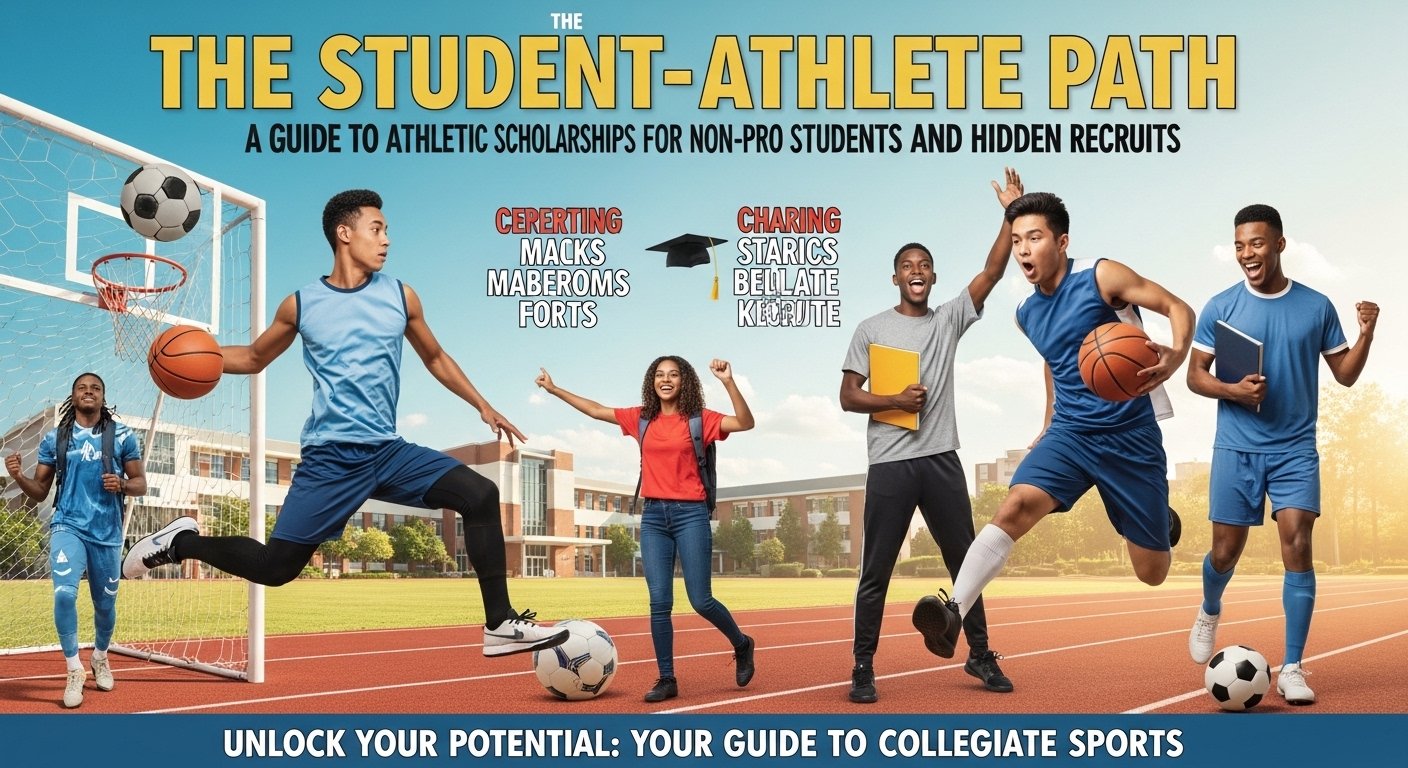
You love your sport, but you know you’re probably not going to the Olympics or the NFL. Does that mean the athletic scholarship dream is over? Not at all. Athletic scholarships for non-pro students are available in a massive range of sports—from rowing and fencing to eSports and bowling. You don’t have to be a “Superstar” to get paid to play; you just have to be a “Strategic Recruit.” This guide explores how to use your athletic skill to fund your degree at the D2, D3, or NAIA level.
The “Big Three” Divisions: Where is the Money?
Understanding the NCAA structure is essential for finding athletic scholarships for non-pro students.
1. Division I: The Full Ride (But High Pressure)
D1 schools have the biggest budgets, but they are also the most competitive. If you aren’t a top-ranked national athlete, D1 might be a stretch.
2. Division II: The “Partial Ride” Sweet Spot
D2 schools offer “Equivalency Scholarships,” meaning they can split their one “full ride” budget into three “partial rides.” This is the best place for athletic scholarships for non-pro students. You can combine a $10,000 athletic grant with a $15,000 academic grant to reach a full scholarship.
3. Division III: The “Academic-Athletic” Blend
D3 schools do *not* offer athletic scholarships. However, they use “Athletic Recruitment” to flag you for massive “Leadership” and “Academic” grants. For a student-athlete with a high GPA, D3 can often be cheaper than D1.
Strategic Success: The “Recruiting Portfolio”
You can’t wait for a coach to find you—you must find them.
The Highlight Reel
Create a 3-minute video of your best plays. Don’t add loud music; coaches want to hear the “Sounds of the Game.” Include your jersey number, your position, and your stats in the first 10 seconds. Post this on YouTube and link it to your recruiting profile.
The “Cold Email” to Coaches
Email the “Head Coach” and “Recruiting Coordinator” at your target schools.
- Subject: [Year] Recruit | [Position] | [GPA] | [Key Stat]
- The Hook: “I’ve watched your team’s performance in the conference finals and I believe my [Specific Skill] would be a perfect fit for your defensive strategy.”
- The Data: Attach your highlight reel and your unofficial transcript.
Finding the “Alternative” Sports Money
One of the best ways to get athletic scholarships for non-pro students is to play a “Niche” sport.
- eSports: Over 200 US colleges now have varsity eSports teams with scholarship budgets for League of Legends, Valorant, and Rocket League players.
- Rowing (Crew): Especially for women, rowing is a massive source of untapped scholarship money due to Title IX regulations.
- Golf and Tennis: Many small private schools struggle to fill these rosters and will offer significant aid to steady, reliable players.
Conclusion
Your sport is a tool, not just a game. By targeting D2/NAIA schools, mastering your recruiting portfolio, and focusing on niche opportunities, you can find athletic scholarships for non-pro students that make your degree affordable. Remember that a “Student-Athlete” is a “Student” first—keep your GPA high, as it’s the ultimate “Insurance Policy” for your athletic recruitment. Use your hustle on the field to build your future off it. The game is just beginning.
Frequently Asked Questions
What is the “NCAA Eligibility Center”?
This is the clearinghouse that verifies your grades and amateur status. You *must* register with them if you want to play D1 or D2 sports. Do this early in your junior year of high school.
Can I lose my scholarship if I get injured?
Usually, no. Most modern scholarship contracts are “Injury Protected,” meaning you keep your funding for the year even if you can’t play. However, always read the “Cancellation Clause” in your letter of intent.
Do NAIA schools offer full scholarships?
Yes. The NAIA (National Association of Intercollegiate Athletics) is separate from the NCAA and often has more flexible rules for international and “non-traditional” recruits.
What is a “Walk-On” athlete?
A walk-on is an athlete who is on the team but doesn’t have a scholarship initially. Many walk-ons “Earn” a scholarship in their second or third year by proving their value to the coach.
Should I use expensive recruiting services?
Generally, no. You can do 90% of the work yourself by emailing coaches directly. Save your money for the application fees and travel for campus visits.