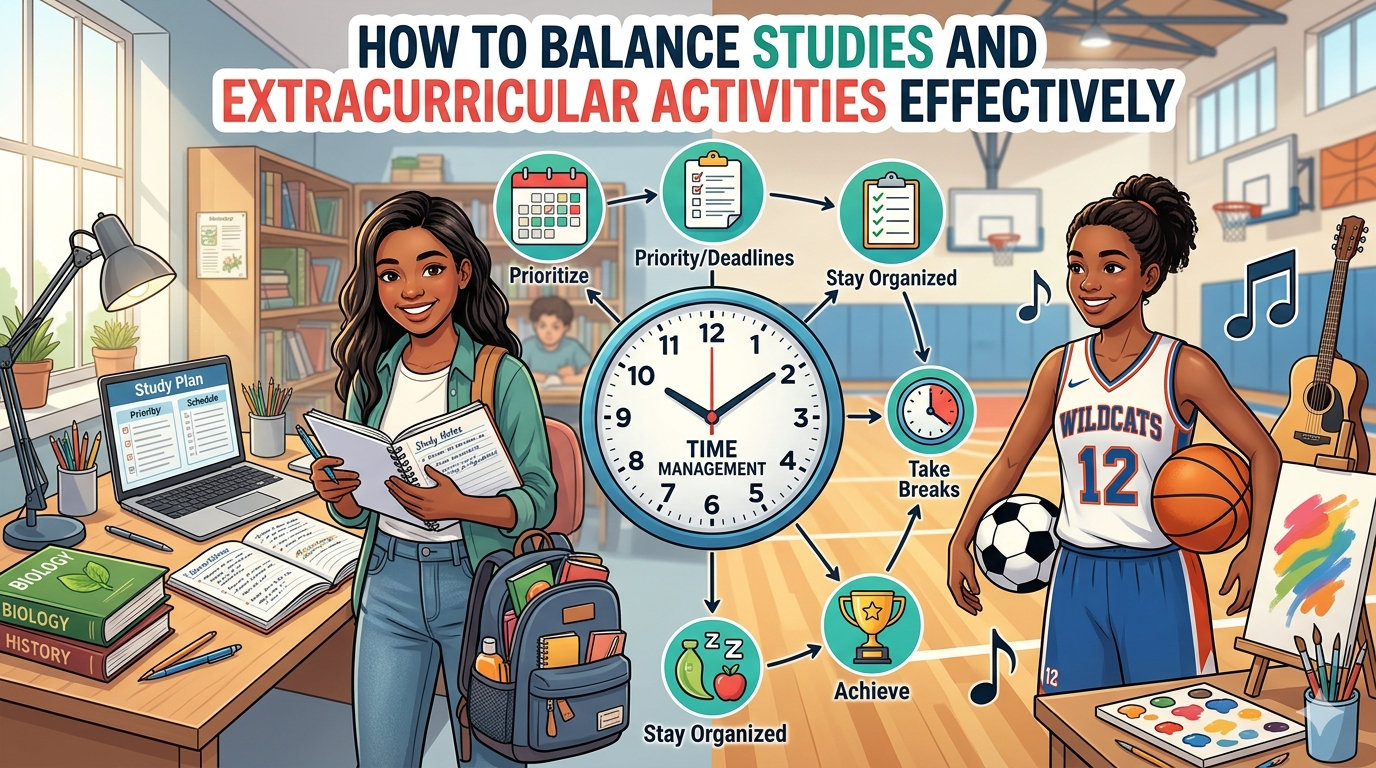
Learn how to balance studies and extracurricular activities effectively with practical strategies, time management tips, and productivity techniques for students aiming for academic success and personal growth.
Balancing studies and extracurricular activities is one of the biggest challenges students face today. With increasing academic pressure and the importance of skill development beyond textbooks, managing both effectively has become essential. While studies build your academic foundation, extracurricular activities enhance creativity, leadership, teamwork, and overall personality. The key lies in maintaining the right balance without compromising either.
This article will guide you through proven strategies, practical tips, and smart habits to help you manage your time, stay productive, and achieve success in both academics and extracurricular pursuits.
Understanding the Importance of Balance
Before diving into strategies, it’s important to understand why balancing studies and extracurricular activities matters.
Focusing only on academics can lead to burnout and limit your personal growth. On the other hand, spending too much time on activities can affect your grades. A balanced approach helps in:
- Improving time management skills
- Reducing stress and increasing mental well-being
- Building a well-rounded personality
- Enhancing college and career opportunities
- Boosting confidence and social skills
Set Clear Priorities
The first step to achieving balance is identifying your priorities. Ask yourself:
- What are your academic goals?
- Which extracurricular activities are most important to you?
- How much time can you realistically dedicate to both?
Once you have clarity, you can allocate your time accordingly. For example, during exam periods, studies should take priority, while during lighter academic weeks, you can focus more on activities.
Create a Structured Schedule
Time management is the backbone of balance. A well-planned schedule helps you stay organized and avoid last-minute stress.
Tips for effective scheduling:
- Use a planner or digital calendar
- Divide your day into time blocks
- Allocate fixed hours for study and activities
- Include breaks to avoid burnout
- Stick to your routine consistently
A structured schedule ensures that neither your studies nor your extracurricular activities are neglected.
Learn to Manage Your Time Wisely
Time management is not just about planning—it’s about execution. Many students create schedules but fail to follow them.
Improve your time management by:
- Avoiding procrastination
- Breaking tasks into smaller chunks
- Using techniques like Pomodoro (25-minute focus sessions)
- Setting deadlines for tasks
- Prioritizing important work over less urgent tasks
Efficient time management allows you to complete your academic work faster, leaving more time for activities.
Choose the Right Activities
Not all extracurricular activities are equally beneficial. Select activities that align with your interests and future goals.
For example:
- If you enjoy leadership, join student councils
- If you’re creative, explore arts, music, or design
- If you’re athletic, participate in sports
- If you like problem-solving, join debate or quiz clubs
Choosing meaningful activities ensures that your time is well spent and contributes to your growth.
Avoid Overcommitment
One of the biggest mistakes students make is trying to do too much. Joining multiple clubs, sports, and events can overwhelm you and affect both your studies and health.
Instead:
- Limit yourself to 1–3 activities
- Focus on quality over quantity
- Give your best to selected commitments
Remember, it’s better to excel in a few areas than to perform poorly in many.
Stay Organized
Being organized saves time and reduces stress. Keep your study materials, assignments, and activity schedules well-managed.
Ways to stay organized:
- Maintain separate folders for subjects
- Keep track of deadlines and events
- Prepare your to-do list daily
- Organize your study space
An organized approach helps you transition smoothly between studies and activities.
Maintain Discipline and Consistency
Consistency is the key to long-term success. Even the best plans fail without discipline.
Build discipline by:
- Following your schedule daily
- Avoiding distractions like excessive social media
- Staying committed to your goals
- Tracking your progress regularly
When you stay consistent, balancing becomes a natural habit rather than a struggle.
Take Care of Your Health
Balancing studies and extracurricular activities can be exhausting if you neglect your health.
Focus on:
- Getting enough sleep (7–8 hours)
- Eating nutritious meals
- Staying physically active
- Taking breaks when needed
A healthy body and mind improve your concentration, energy levels, and overall performance.
Learn to Say No
Not every opportunity needs to be accepted. Sometimes, saying “no” is necessary to maintain balance.
If an activity interferes with your studies or overwhelms you, it’s okay to step back. Prioritizing your well-being and academic goals is more important than trying to please everyone.
Use Free Time Productively
Small pockets of free time can be used effectively.
For example:
- Revise notes during short breaks
- Plan upcoming tasks
- Practice skills related to your activities
Using time wisely throughout the day helps reduce workload later.
Seek Support When Needed
You don’t have to manage everything alone. Seek help from:
- Teachers for academic guidance
- Coaches or mentors for activities
- Parents for support and advice
- Friends for collaboration and motivation
Support systems make balancing easier and less stressful.
Evaluate and Adjust Regularly
Balancing studies and extracurricular activities is not a one-time task—it requires continuous adjustment.
Ask yourself regularly:
- Am I managing my time well?
- Are my grades improving or declining?
- Do I feel stressed or balanced?
If something isn’t working, adjust your schedule, reduce commitments, or change strategies.
Stay Motivated and Positive
Maintaining balance can sometimes feel challenging, but staying motivated makes a big difference.
Stay positive by:
- Celebrating small achievements
- Setting realistic goals
- Reminding yourself of long-term benefits
- Surrounding yourself with supportive people
A positive mindset helps you stay focused and resilient.
Conclusion
Balancing studies and extracurricular activities effectively is a skill that every student should develop. It requires careful planning, disciplined execution, and continuous self-evaluation. By setting clear priorities, managing your time wisely, avoiding overcommitment, and maintaining a healthy lifestyle, you can excel in both academics and personal development.
Remember, success is not just about good grades—it’s about becoming a well-rounded individual. When you strike the right balance, you not only achieve academic excellence but also develop essential life skills that prepare you for future challenges.
FAQs
1. How many extracurricular activities should a student participate in?
Ideally, students should focus on 1–3 activities to maintain quality and avoid overwhelming themselves.
2. Can extracurricular activities affect academic performance?
Yes, if not managed properly. However, with good time management, they can actually improve productivity and reduce stress.
3. What is the best way to manage time between studies and activities?
Creating a structured schedule, setting priorities, and avoiding procrastination are the most effective ways.
4. How can I stay focused while balancing both?
Use techniques like time blocking, minimize distractions, and take regular breaks to maintain focus.
5. Is it okay to quit an extracurricular activity?
Yes, if it negatively impacts your studies or well-being. It’s important to prioritize your overall balance and mental health.