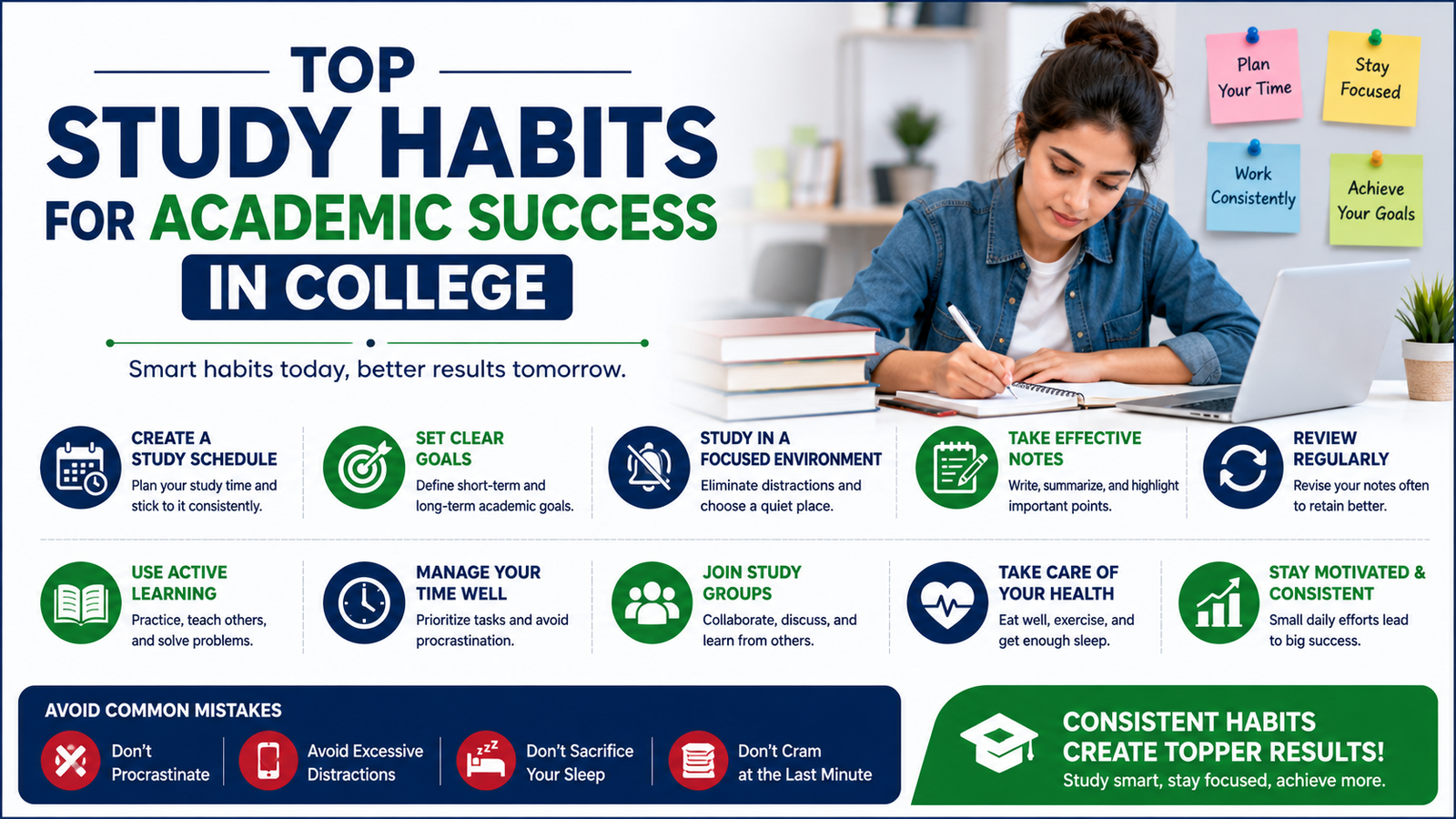
College life brings new opportunities, challenges, and responsibilities. Students are expected to manage lectures, assignments, projects, exams, and personal commitments—all while adjusting to a more independent learning environment. In this setting, good study habits are essential for academic success.
Why Study Habits Matter in College
Good study habits influence how students manage learning and academic responsibilities.
Benefits include:
- Better understanding of subjects
- Improved exam performance
- Less stress during deadlines
- Better time management
- Higher confidence
- Stronger academic consistency
College learning requires self-discipline, and habits create the structure students need.
Create a Regular Study Schedule
A consistent schedule is one of the most important habits.
Why it helps
Studying at regular times improves focus and creates a routine.
Tips
- Choose fixed study hours daily
- Match difficult subjects with peak energy times
- Include breaks
- Review weekly goals
Consistency is more effective than irregular long sessions.
Set Clear Academic Goals
Goals give direction to your study efforts.
Examples:
- Complete one chapter daily
- Finish assignments before deadlines
- Improve grades in specific subjects
- Prepare weekly for exams
Short-term goals make progress easier to track and improve motivation.
Study in a Distraction-Free Environment
The place where you study affects concentration.
Ideal study space
- Quiet
- Comfortable
- Organized
- Well-lit
- Minimal interruptions
Avoid distractions like excessive phone use or loud environments.
Take Effective Notes
Note-taking improves understanding and retention.
Good note habits
- Summarize key ideas
- Highlight important concepts
- Use diagrams when helpful
- Review notes regularly
Writing information actively improves memory.
Review Daily
Regular revision prevents last-minute stress.
Benefits
- Better retention
- Faster exam preparation
- Stronger understanding
- Reduced forgetting
Reviewing class notes each day saves significant time before exams.
Use Active Learning Techniques
Passive reading is less effective than active study.
Active methods include
- Asking questions
- Solving practice problems
- Teaching concepts to others
- Flashcards
- Self-testing
Active learning improves long-term understanding.
Manage Time Properly
Time management is critical for students balancing coursework and campus life.
Helpful practices:
- Use a planner
- Prioritize assignments
- Break large tasks into smaller steps
- Avoid procrastination
Good time management reduces academic pressure.
Stay Consistent Instead of Cramming
Cramming may help temporarily but is less effective for real understanding.
Better approach
- Study regularly
- Revise weekly
- Practice over time
- Build gradual mastery
Long-term learning requires repeated exposure.
Ask Questions and Seek Help
Successful students actively seek clarification.
Ask:
- Professors
- Classmates
- Tutors
- Study groups
Seeking help early prevents confusion from growing.
Practice Healthy Habits
Academic success depends on physical and mental health too.
Important habits:
- Adequate sleep
- Healthy food
- Regular exercise
- Stress management
- Hydration
Healthy routines improve concentration and energy.
Limit Multitasking
Multitasking often reduces learning quality.
Avoid:
- Studying while scrolling social media
- Watching videos unrelated to study
- Constant interruptions
Focused single-tasking improves results.
Use Technology Wisely
Technology can support learning when used correctly.
Helpful tools:
Use apps for organization—not distraction.
Join Study Groups
Collaborative learning improves understanding.
Benefits:
- Shared notes
- Discussion
- Clarification
- Motivation
- Accountability
Choose focused groups that stay productive.
Avoid Common Study Mistakes
Students often struggle because of poor habits.
Common mistakes:
- Skipping lectures
- Procrastination
- Cramming
- Poor sleep
- Lack of planning
- Ignoring weak subjects
Recognizing these habits is the first step toward improvement.
Stay Motivated
Motivation supports consistency.
Ways to stay motivated:
- Track progress
- Reward achievements
- Set realistic goals
- Focus on long-term career plans
Motivation combined with discipline leads to success.
Source
https://l1nq.com/y98utma
https://l1nq.com/q3ru6em
Conclusion
Strong study habits are the foundation of academic success in college. Students who build routines, manage time, review regularly, and stay organized are more likely to perform well and feel less stressed.
Success is not about studying all day—it is about studying effectively. By improving focus, setting goals, using active learning methods, and maintaining healthy habits, students can create long-term academic success.
Small daily habits can make a major difference over time. Building the right study habits today creates better grades, stronger confidence, and future opportunities.
FAQs
1. What are the best study habits for college students?
Regular study schedules, active learning, note-taking, revision, and time management are among the best habits.
2. How many hours should college students study daily?
This varies, but 2–4 focused hours daily works well for many students.
3. Is studying every day necessary?
Daily study improves consistency and reduces exam stress.
4. Are study groups useful?
Yes, if they remain focused and help clarify concepts.
5. How can students improve concentration?
Studying in a quiet environment and reducing distractions helps significantly.
6. Can good study habits improve grades?
Yes. Consistent and effective habits often lead to better academic performance.